Business License

MBY Ball Mill Reducer: Complete Specifications and Selection Guide
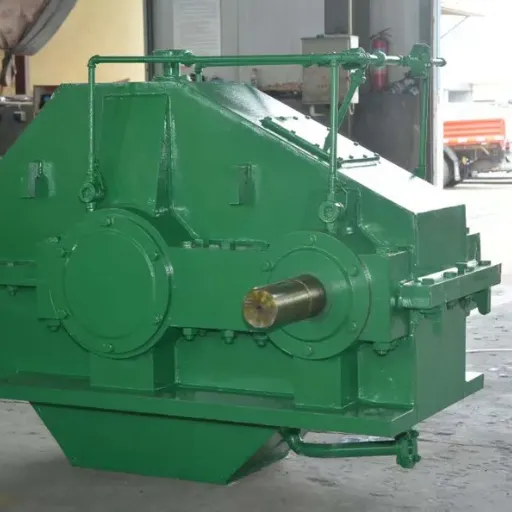
The MBY ball mill reducer is an edge-drive mill reducer engineered for ball mills, raw meal mills, and coal mills in cement and mining plants. It converts high-speed motor rotation into the low-speed, high-torque output required to turn a heavy mill drum reliably under continuous duty.
When a cement plant in Vietnam replaced a worn-out unit in 2024, the maintenance team initially considered a lower-cost generic gearbox. After reviewing load cycles, ambient dust, and startup torque, they chose a case-hardened MBY reducer with a higher service factor. Two years later, the mill has logged more than 16,000 operating hours with no unplanned downtime. The right MBY ball mill reducer paid for itself in avoided production losses.
That story illustrates why reducer selection matters. In this guide, you'll learn what the MBY series is, how it is built, where it is used, and how to select the correct model for your mill. You'll also see how the MBY series compares to related mill reducer lines and what questions to ask before ordering.
Key Takeaways
The MBY ball mill reducer is designed for edge-drive ball mills, cement mills, raw meal mills, and coal mills.
Case-hardened alloy steel gears, rigid housings, and high service factors allow continuous duty in severe grinding applications.
Common models include MBY400, MBY560, MBY630, and MBY710, with torque ratings matched to mill size.
Selection depends on motor power, output speed, service factor, mounting layout, and environmental conditions.
Jiangsu Manqi Machinery manufactures standard MBY reducers and custom units engineered to customer drawings.
What Is an MBY Ball Mill Reducer?
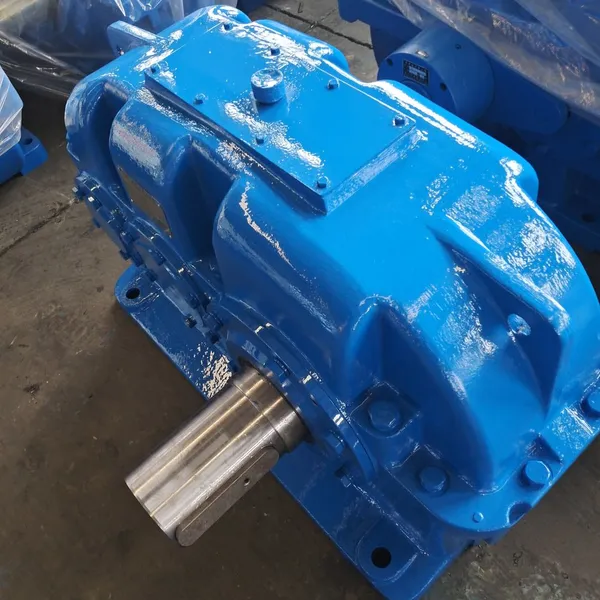
An MBY ball mill reducer is a specialized edge-drive gear reducer that sits beside the mill drum and drives a pinion meshing with a girth gear ring. It is part of the MBY series, a family of mill reducers widely used in cement plants, mining operations, and power stations.
The reducer's job is to transform motor power, typically high speed and relatively low torque, into the slow, powerful rotation a ball mill drum needs. A typical ball mill drum turns between 12 and 25 rpm, while the driving motor may run at 740, 990, or 1,480 rpm. The MBY reducer bridges that gap through one or more gear stages, usually combined with a final pinion-girth gear stage.
MBY ball mill reducers are built for severe duty. The grinding media inside a ball mill create constant impact and abrasion loads. Starting torque can be two to three times running torque. Dust, heat, and vibration are normal.
A standard industrial gearbox would fail quickly in this environment, which is why mill reducers use heavier materials, larger bearings, and higher safety margins.
Want to see how MBY reducers fit your mill layout? Explore our full gear reducer catalog for model ranges, specifications, and application guidance.
MBY Ball Mill Reducer Design and Construction
Housing and Frame
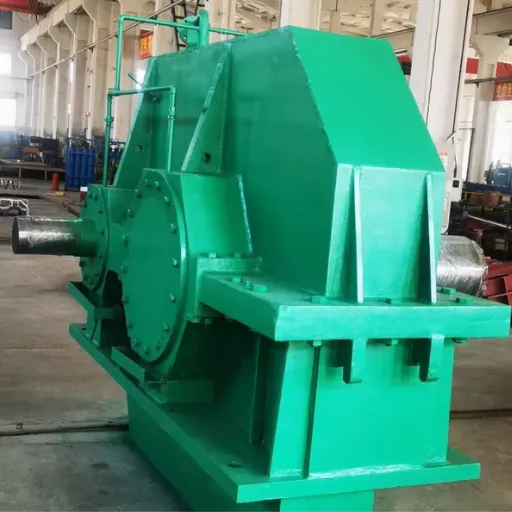
The MBY ball mill reducer housing is typically a rigid cast iron or welded steel structure designed to absorb the bending moments and shock loads generated by the mill. The housing must maintain gear alignment under load; even small deflections can cause uneven tooth contact, noise, and premature wear.
Rigid feet and a robust base flange help transfer forces into the foundation without flexing. For larger units, the housing includes lifting eyes and service access covers to simplify installation and maintenance.
Gears and Shafts
The heart of the MBY ball mill reducer is its gear set. Key characteristics include:
Case-hardened alloy steel gears with tooth surface hardness typically in the HRC 58-62 range
Precision-ground or shaved tooth profiles for smooth meshing and even load distribution
High-capacity bearings selected for rated load and L10 life under continuous duty
Output shaft sized to handle the mill pinion loads and any bending from coupling or girth gear alignment
The input shaft couples to the motor, usually through a flexible coupling. The output shaft drives the mill pinion. Some designs include an intermediate gear stage to achieve the required reduction ratio.
Lubrication and Cooling
Continuous operation generates heat. MBY ball mill reducers typically use splash lubrication or forced lubrication, depending on size and speed. Oil level, oil quality, and filtration directly affect gear and bearing life.
For high-ambient-temperature installations, auxiliary cooling may be required. Always confirm the lubrication system and oil grade with the manufacturer for your specific operating conditions.
Sealing and Protection
Dust is a constant enemy in cement and mining plants. MBY reducers use shaft seals and labyrinth seals to keep contaminants out of the oil bath. Breathers with filters prevent pressure buildup while blocking dust ingress.
Where MBY Ball Mill Reducers Are Used
Cement Plants
In cement manufacturing, MBY ball mill reducers drive raw meal mills, cement mills, and coal mills. These mills grind raw materials, clinker, and coal to the fine powders needed for kiln feed and fuel preparation.
A plant manager in Indonesia once explained that his facility runs three cement mills around the clock. When one mill stops, the kiln must reduce output within hours. Reliability of the mill drive is not a convenience; it's a production requirement. That's why his plant specifies MBY reducers with documented inspection reports and spare parts availability.
Mining and Mineral Processing
Ball mills in mining operations grind ore to liberate minerals before flotation or leaching. The mills are large, the media are heavy, and the loads are unpredictable. MBY ball mill reducers for mining applications are often specified with higher service factors to handle shock loads from ore size variation.
Power Stations and Coal Mills
Coal pulverizers in power plants use similar grinding technology. MBY reducers can be found driving coal mills where the demand for continuous operation and moderate torque aligns with the series ratings.
Chemical and Metallurgical Industries
Some chemical and metallurgical plants use ball mills for mixing, grinding, or material preparation. When the drive arrangement is edge drive and the loads match MBY ratings, the series offers a proven, cost-effective solution.
How to Select the Right MBY Ball Mill Reducer
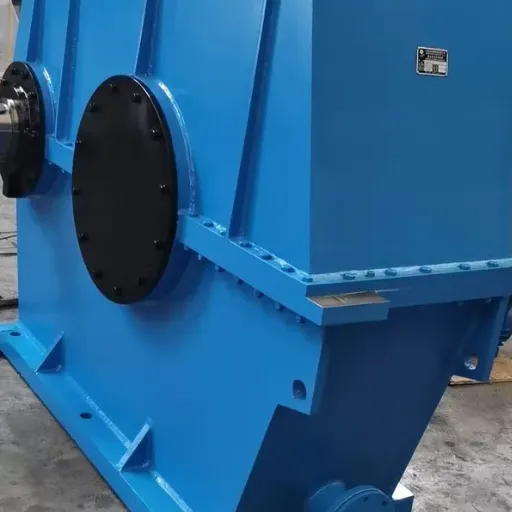
Selecting an MBY ball mill reducer requires more than matching motor power. The process should account for operating torque, service factor, reduction ratio, mounting, and environment.
Step 1: Define Motor Power and Input Speed
Start with the motor rated power in kilowatts and the motor full-load speed in rpm. These determine the input torque and the reduction ratio needed to reach the mill drum speed.
Step 2: Calculate Required Output Torque
Output torque is the critical figure. It must be sufficient to turn the loaded mill drum under the worst expected conditions, including startup and feed variation. The formula is:
T = (9550 × P) / n
Where T is torque in Nm, P is power in kW, and n is output speed in rpm. Confirm whether the rating is continuous or based on peak duty.
Step 3: Apply the Service Factor
The service factor accounts for load variability, shock, operating hours, and starting conditions. For ball mill applications, service factors commonly range from 1.5 to 2.5.
A conservative service factor extends gear and bearing life. It also provides margin for process upsets. As one maintenance engineer put it, "A slightly larger reducer is always cheaper than a weekend shutdown."
Step 4: Match the Reduction Ratio
Common ball mill drum speeds range from 12 to 25 rpm. Motors typically run at 740, 990, or 1,480 rpm. The total reduction ratio must bring motor speed down to drum speed, often through a combination of the MBY reducer and a pinion-girth gear stage.
Step 5: Check Mounting Dimensions
For replacement projects, dimensional equivalence matters. Verify:
Center height and base bolt pattern
Input shaft diameter, length, and keyway
Output shaft diameter, length, and keyway
Overall footprint and maintenance clearance
For new mills, early coordination between the mill supplier and reducer manufacturer prevents expensive redesign.
Step 6: Specify Materials and Inspection
Request material certificates, heat treatment records, and inspection reports. Key items include:
Gear hardness and case depth
Tooth contact pattern check
Noise and vibration test results
Runout verification
Assembly and no-load test records
Common MBY Models and Specifications
The MBY series includes several standard sizes. Exact ratings vary by manufacturer and design revision, but the following table gives a general sense of the range:
| Model | Typical Motor Power Range | Approximate Output Torque Range | Common Applications |
|---|---|---|---|
| MBY400 | 200-400 kW | 60,000-120,000 Nm | Small cement mills, raw meal mills |
| MBY560 | 400-800 kW | 120,000-250,000 Nm | Mid-size cement and coal mills |
| MBY630 | 800-1,250 kW | 250,000-400,000 Nm | Large cement mills, mining ball mills |
| MBY710 | 1,250-2,000 kW | 400,000-650,000 Nm | Heavy mining and large cement mills |
Always confirm current ratings with the manufacturer. Older designs, custom units, or units built to different standards may differ from these ranges.
MBY vs. MBYX, JDX, and Other Mill Reducers
MBY and MBYX Series
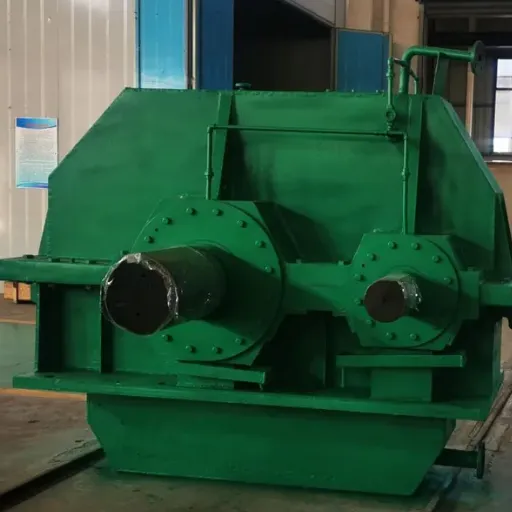
The MBYX series is closely related to the MBY series. Both are edge-drive mill reducers. The "X" typically denotes a design variation, often with modified shaft arrangement, housing dimensions, or auxiliary features. In practice, the MBY and MBYX series serve similar applications, and the choice depends on the mill manufacturer's specified drive layout.
JDX Series Center-Drive Reducers
JDX reducers are designed for center-drive mills, where the drive system is located at the center of the mill drum. These reducers handle high radial and axial loads and are common in large modern cement mills. If your mill uses center drive, the MBY ball mill reducer is not the right choice; JDX is.
ZD Series Auxiliary Drives
ZD reducers are single-stage cylindrical reducers often used as auxiliary or smaller mill drives. They are not typically used as the main reducer for large ball mills but may appear in feed systems, auxiliary equipment, or smaller grinding installations.
Not sure whether your mill needs MBY, MBYX, or JDX? Contact our engineers with your mill drawings and drive arrangement, and we will recommend the correct series.
MBY Ball Mill Reducer Installation and Commissioning Best Practices
Foundation and Alignment
A mill reducer lives or dies by its alignment. The foundation must be flat, rigid, and free from cracks. Use precision leveling and follow the manufacturer's alignment tolerances for coupling and pinion mesh.
Even a high-quality MBY ball mill reducer will fail early if misaligned. One cement plant in North Africa discovered that a 0.3 mm offset in coupling alignment was causing bearing temperatures 15°C above normal. Correcting the alignment eliminated the overheating and extended bearing life.
Lubrication Startup
Before the first run, confirm oil type, oil level, and filter condition. Run the lubrication system before starting the mill to ensure oil reaches all bearings and gear meshes. Check for leaks during the first 24 hours of operation.
No-Load and Load Testing
Run a no-load test to check rotation direction, noise, vibration, and bearing temperatures. Gradually increase load while monitoring temperatures and vibration levels. Document baseline values; they become the reference for future condition monitoring.
Maintenance and Troubleshooting
Routine Inspection
A simple inspection schedule prevents most failures:
Check oil level and color weekly
Inspect shaft seals and breathers monthly
Monitor bearing temperatures and vibration monthly
Change oil according to manufacturer recommendations or oil analysis results
Inspect tooth contact pattern during planned shutdowns
Common Warning Signs
Watch for these indicators of potential trouble:
Rising bearing temperatures
Increasing noise or vibration
Oil contamination with metal particles
Leakage around seals or joints
Unusual load fluctuations
Addressing these early avoids catastrophic failures. A spare reducer or spare gear set reduces downtime when major repairs are needed.
Frequently Asked Questions
What does MBY stand for in ball mill reducers?
MBY is a Chinese standard designation for a series of edge-drive ball mill reducers. The series is widely manufactured by reducer factories in Taixing and other Chinese industrial clusters for cement and mining applications worldwide.
How do I know if I need an MBY reducer or a JDX reducer?
Check your mill's drive arrangement. If the motor and reducer sit beside the mill drum and drive a pinion meshing with a girth gear ring, you need an edge-drive reducer such as the MBY series. If the drive is at the center of the mill drum, you need a center-drive reducer such as the JDX series.
What is the typical service factor for an MBY ball mill reducer?
Service factors for ball mill reducers typically range from 1.5 to 2.5, depending on mill size, media load, material hardness, operating hours, and startup conditions. When in doubt, specify a higher service factor.
Can MBY reducers be customized?
Yes. Manufacturers including Jiangsu Manqi Machinery can customize shaft dimensions, mounting arrangements, housing geometry, and lubrication systems to match non-standard mill layouts or environmental conditions.
What maintenance does an MBY reducer require?
Routine maintenance includes oil level checks, oil changes, seal inspections, vibration monitoring, bearing temperature checks, and periodic tooth contact pattern inspection. Follow the manufacturer's maintenance manual for intervals.
Conclusion
The MBY ball mill reducer remains a proven choice for edge-drive grinding mills in cement, mining, and related industries. Its case-hardened gears, rigid housing, and high torque capacity are designed for the continuous heavy loads that ball mills impose.
Selecting the right unit means matching motor power, output torque, service factor, reduction ratio, and mounting dimensions to your specific mill. It also means choosing a supplier who provides material certificates, inspection reports, and after-sales support.
At Jiangsu Manqi Machinery, we manufacture MBY, MBYX, JDX, ZD, and custom mill reducers from our facility in Taixing City. Whether you need a standard replacement unit or a custom-engineered drive, our team reviews your mill parameters and recommends the right solution.
Ready to specify your MBY ball mill reducer? Contact our engineering team with your motor power, mill speed, and mounting requirements, and we will provide a technical recommendation and quotation.
Recently Posted
-
NGW Planetary Gear Reducer: A Selection Guide for Compact High-Torque Drives
July 30, 2026An NGW planetary gear reducer is a single-stage epicyclic gearbox that uses a central sun gear, planet gears, and an internal ring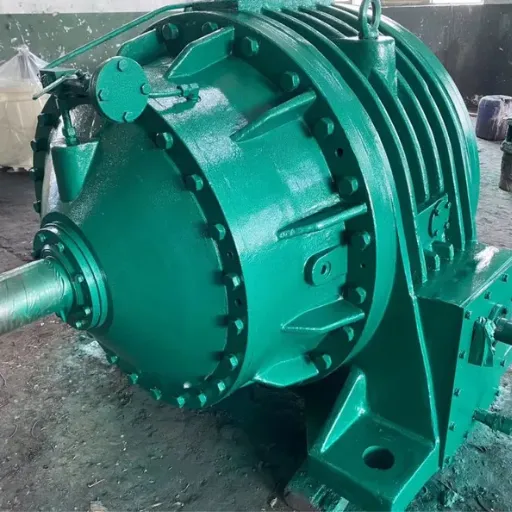 Read More
 -
Heavy Duty Planetary Reducer: A Guide for High-Torque Industrial Drives
July 30, 2026A heavy duty planetary reducer is the right choice when you need high output torque, shock-load capacity, and a compact footprint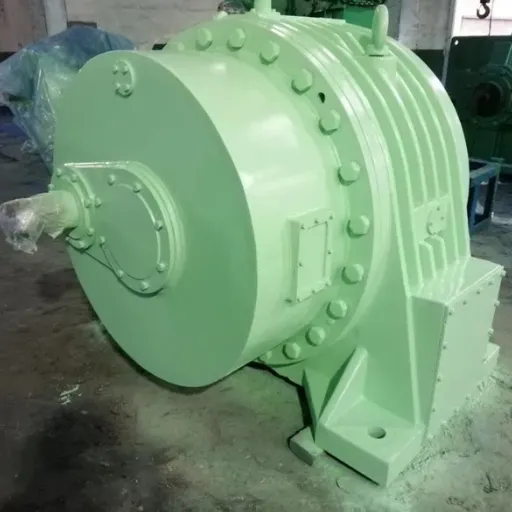 Read More
 -
Planetary Gear Motor: A Complete Engineer's Guide to Selection and Application
July 30, 2026A planetary gear motor is a compact drive solution that pairs a planetary gear reducer with an electric motor to deliver high outp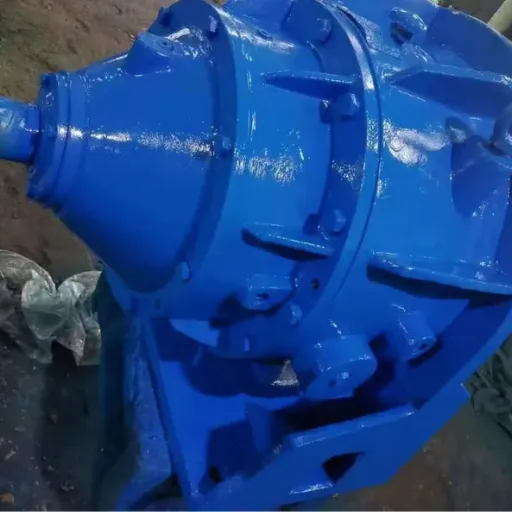 Read More
 -
High Torque Planetary Reducer: A Selection Guide for Heavy-Duty Industrial Drives
July 30, 2026A high torque planetary reducer is a compact drive system that distributes heavy loads across multiple planet gears meshing with a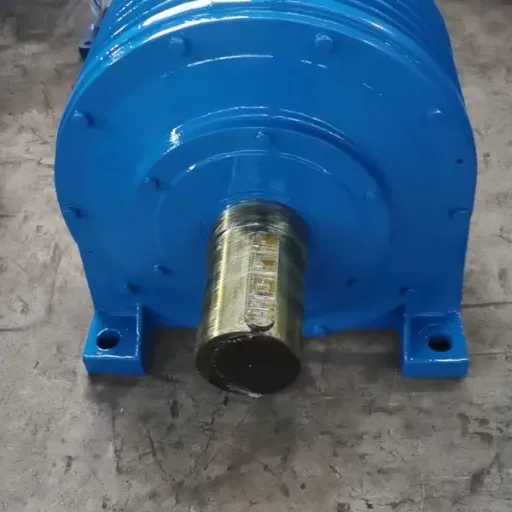 Read More

Contact Us
Recommended Products
-
 Kf127 Series Helical-Bevel Gear Motors for Industrial Power TransmissionNegotiableMOQ: 1 Set
 -
H1SH11 Modular Gearbox for Coal Mining Machinery With Cast Steel Housing and Mill Test ReportNegotiableMOQ: 1 Set
-
NGW101 Planetary Gear Reducer With Integral Flange Mount, 40Nm TorqueNegotiableMOQ: 1 Piece
-
Shanghai Dongfang DFSS400-520/4 Industrial Centrifugal Pump Wear RingNegotiableMOQ: 10 Pieces
-
SLOW300-550 High Hardness Shaft Bushing Spare Parts Matching Shanghai Liancheng Water Pump AccessoriesNegotiableMOQ: 1 Piece
-
Shanghai Kaiquan KQSN300-X13A/390 Original Pump Seal Ring Spare PartNegotiableMOQ: 10 Pieces
-
Shanghai Dongfang IHH100-65-250 Chemical Pump Anti-Corrosion Seal RingNegotiableMOQ: 10 Pieces
-
Shanghai Dongfang DFSS600-24N/6 Wear Spare Ring for DFSS Water PumpNegotiableMOQ: 10 Pieces
-
Coaxial Parallel Shaft Gearbox Systems With Right Angle Spiral Bevel Helical Gear MotorsNegotiableMOQ: 1 Set
-
ZS125 Cylindrical Gear Reducer for Industrial Mixing ApplicationsNegotiableMOQ: 100 Sets
-
ZLY224 Cylindrical Gear Reducer With Hardened Steel Gears and 224mm Center DistanceNegotiableMOQ: 1 Piece
-
R87 Compact Inline Gear Motor Low Noise for Conveyor EquipmentNegotiableMOQ: 1 Set
-
NGW93 High Efficiency Low Vibration Planetary Gear Reducer For Machinery DriveNegotiableMOQ: 1 Piece
-
H1SH11 Modular Gear Reducers for CNC Machine IntegrationNegotiableMOQ: 1 Set
-
Gearmotor Converter System R/F/K/S Series Coaxial Parallel Shaft Gearbox Spiral Bevel MotorNegotiableMOQ: 1 Set
-
G3 Series Flange Mounted Helical Gear Motor Speed Reducer With Bevel GearboxNegotiableMOQ: 1 Set
-
Industrial Mixer Drive Solution With F Series Parallel Shaft Geared Motors F57 to F97NegotiableMOQ: 1 Set
-
Parallel Shaft Speed Reducer F Series, Models F57 F67 F77 F87 F97, IP55 Protection RatedNegotiableMOQ: 1 Set
-
Parallel Shaft Geared Motor F Series, F57-F97 With C-face Input Flange, 220V/380V OptionsNegotiableMOQ: 1 Set
-
Industrial ZSY630 Cylindrical Gear Reducer For Industrial Transmission EquipmentNegotiableMOQ: 1 Piece