Business License

Ball Mill Reducer Selection: A Step-by-Step Engineer's Guide
The right ball mill reducer selection depends on your mill drive arrangement, actual torque demand, service factor, and installation constraints: choose MBY/MBYX series for edge-drive mills, JDX series for center-drive mills, and custom-engineered units when footprint or load conditions deviate from standard designs. Getting any of these variables wrong leads to premature wear, excessive vibration, and costly unplanned downtime.
What if the reducer you specify today determines whether your cement or mining operation hits its production targets five years from now? That scenario is more common than most engineers expect.
A mining engineer in Chile once told us that his team selected a ball mill gearbox based almost entirely on motor power and price. Within 18 months, pitting appeared on the gear teeth, bearing temperatures rose above acceptable limits, and the mill was shut down for an emergency replacement.
The reducer was not defective. It was simply underspecified for the shock loads, operating hours, and thermal conditions of that particular mine.
You probably already know that a reducer is not an off-the-shelf commodity. You also know that replacing a failed unit in a running plant costs far more than choosing the right one up front.
In this guide, you will learn a practical, step-by-step framework for ball mill reducer selection. We will cover drive arrangement, torque and service factor calculations, reduction ratio, mounting dimensions, material quality, and the standard-versus-custom decision.
By the end, you will be able to evaluate reducer options with confidence and ask suppliers the questions that separate reliable units from risky ones.
At Jiangsu Manqi Machinery, we manufacture MBY, MBYX, JDX, ZD, and custom ball mill reducers for cement plants, mining operations, and coal mills worldwide. Our application engineers review customer drive parameters every day, and the selection process below reflects what we have learned from those projects.
Key Takeaways
Ball mill reducer selection starts with drive arrangement: edge drive uses MBY/MBYX series, and center drive uses JDX series.
Required output torque, reduction ratio, and service factor (typically 1.5 to 2.5 for ball mills) determine the correct reducer size.
Always verify center height, bolt pattern, shaft dimensions, and maintenance clearance before finalizing a unit.
Case-hardened alloy steel gears (HRC 58–62), precision-ground tooth profiles, and rigid housings are minimum quality indicators for heavy-duty mill service.
Choose a custom or non-standard reducer when footprint, shaft arrangement, load profile, or ambient conditions differ from catalog designs.
Why Ball Mill Reducer Selection Matters More Than You Think
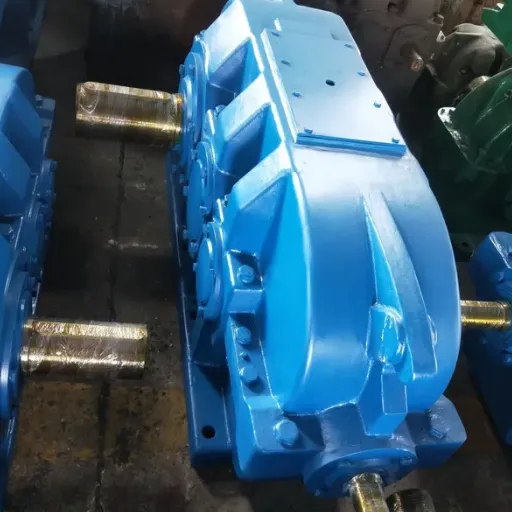
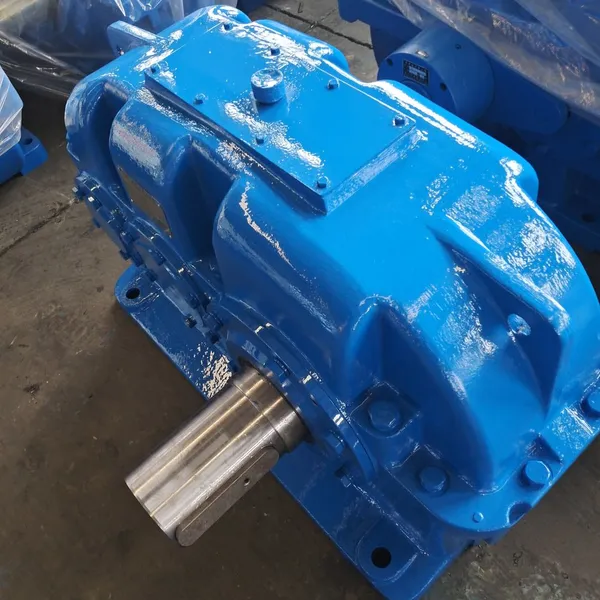
A ball mill reducer, sometimes called a ball mill gearbox, converts high-speed, low-torque motor power into the slow, high-torque rotation a grinding drum needs. A mid-size cement mill drum can weigh hundreds of tons and must turn at 12 to 25 rpm. Electric motors, by contrast, typically run at 740, 990, or 1,480 rpm. The reducer bridges that gap while surviving some of the harshest conditions in industrial power transmission.
The wrong reducer does not fail immediately. It fails gradually through tooth pitting, bearing fatigue, oil breakdown, or housing distortion. Each of those problems starts small but accelerates under continuous duty. Eventually, the mill must stop, and every hour of lost production multiplies the original cost savings from a cheaper unit.
Common consequences of poor ball mill reducer selection include:
Premature tooth surface fatigue and pitting
High bearing temperatures and lubricant degradation
Excessive vibration transmitted to the mill foundation
Misalignment between motor, reducer, and pinion
Unplanned shutdowns for replacement or rebuild
The selection process is therefore not just a sizing exercise. It is a reliability decision that affects maintenance budgets, production schedules, and total cost of ownership over the life of the mill.
Want to understand how reducer types fit different mill layouts first? Read our complete guide to ball mill reducer types and applications before diving into the selection steps below.
Step 1: Identify Your Ball Mill Drive Arrangement
The first and most important decision in ball mill reducer selection is the mill drive arrangement. There are two primary configurations, and each requires a different reducer family.
Edge Drive Mills
In an edge drive arrangement, the motor and reducer sit beside the mill drum. The reducer output shaft drives a small pinion that meshes with a large girth gear ring bolted around the drum's periphery. This layout is common in smaller to mid-size mills, older installations, and many cement raw meal and coal mills.
Typical reducer choice: MBY series or MBYX series edge-drive mill reducer.
The MBY ball mill reducer is engineered with high torque capacity, a rigid housing, and an output shaft designed specifically to drive the mill pinion. They are widely used in:
Cement raw meal mills
Cement finish mills
Coal mills
Smaller mining ball mills
The main advantage of an edge drive ball mill reducer is accessibility. The drive train is located outside the mill shell, which makes inspection and maintenance easier. However, the open girth gear and pinion require their own lubrication and protection from dust.
Center Drive Mills
In a center drive arrangement, the motor and reducer are located at the center of the mill drum. This design is common in large modern mills because it distributes loads more evenly and eliminates the external girth gear.
Typical reducer choice: JDX series center-drive mill reducer.
The JDX mill reducer is built to absorb the heavy radial and axial loads that come with central mill drives. It is typically used in:
Large cement mills
Mining ball mills where edge drive is impractical
Modern mill installations with compact layouts
A center drive mill reducer often has a smaller footprint around the mill but requires precise alignment and robust bearing systems. Maintenance access can be more challenging, so reliability and oil cleanliness become even more important.
How to Decide
If you are replacing an existing reducer, match the original drive arrangement unless a qualified mill engineer confirms that conversion is feasible. If you are designing a new mill, consult the mill manufacturer or an experienced reducer supplier to confirm the optimal layout. Changing from edge drive to center drive, or vice versa, affects foundation design, maintenance access, and the entire drive train.
Ready to compare reducer series for your drive arrangement? View our gear reducer catalog to see MBY, MBYX, JDX, and related mill drive options.
Step 2: Define Load and Torque Requirements
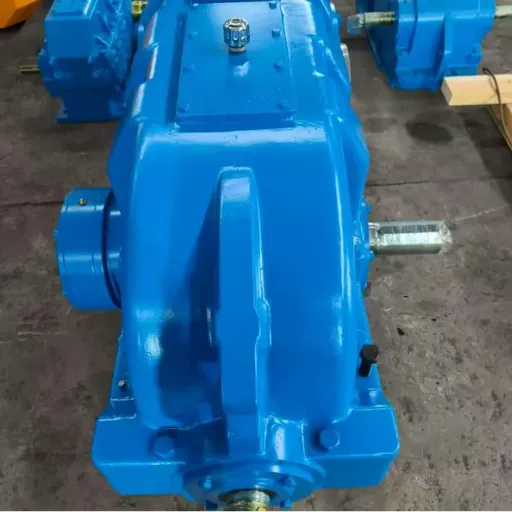
Once you know the drive arrangement, the next step is quantifying the mechanical load. This is where many selection errors begin. Motor power alone is not enough.
Motor Power and Input Speed
Start with the motor power in kilowatts (kW) and the motor rated speed in rpm. These two figures determine the baseline torque at the reducer input shaft. Common mill motors run at:
740 rpm (8-pole motors)
990 rpm (6-pole motors)
1,480 rpm (4-pole motors)
The input speed affects the reduction ratio required to reach the target drum speed. It also influences the lubrication and cooling requirements inside the reducer.
Output Torque Calculation
Output torque is the key figure in ball mill reducer selection. The reducer must deliver enough torque at the drum speed to overcome the load, even under worst-case conditions such as startup, uneven feed, or high media charge.
Output torque depends on:
Motor power
Reduction ratio
Mechanical efficiency
Service factor
A useful approximation is to calculate the torque required at the mill drum and then select a reducer with a rated output torque that exceeds that value after applying the service factor. If the numbers are unclear, ask your reducer supplier to verify the calculation. A small error here compounds over years of operation.
Service Factor: The Margin That Saves Reducers
The service factor accounts for load variability, shock, operating hours, and startup conditions. Ball mills are not steady-load machines. Media impacts, material feed variations, and starting torque all increase stress on the reducer.
For ball mill applications, service factors typically range from 1.5 to 2.5 depending on:
Mill size and media load
Material hardness and feed consistency
Daily operating hours
Frequency of starts and stops
Ambient temperature and dust conditions
When in doubt, choose a higher service factor. The small increase in unit cost is far less expensive than replacing a failed reducer or losing production to unplanned downtime.
Engineering Note
Always verify service factor against actual operating conditions, not just nominal motor power. Catalog ratings assume ideal conditions. Real mills rarely operate under ideal conditions.
Step 3: Match the Reduction Ratio
The reduction ratio is the relationship between input speed and output speed. Common ball mill drum speeds range from 12 to 25 rpm, while motors typically run at 740 to 1,480 rpm. The reducer must bring the motor speed down to the required drum speed.
Some applications achieve the final speed reduction in two stages: the reducer provides the primary reduction, and the pinion-girth gear set provides the secondary reduction. In center drive systems, the reducer may provide most or all of the reduction.
When selecting the ratio:
Confirm the exact target drum speed from the mill manufacturer or operating records.
Account for motor slip and actual running speed, not just nameplate speed.
Check whether the reducer ratio is fixed or available in multiple steps.
Verify that the output torque at the selected ratio meets your requirements.
A mismatch in reduction ratio causes the mill to run too fast or too slow. Either condition reduces grinding efficiency and increases mechanical stress.
Step 4: Verify Mounting and Dimensional Fit
Even a perfectly sized reducer will fail if it does not fit the installation. For replacement projects, the simplest and lowest-risk path is usually a dimensionally equivalent unit. For new mills, early coordination between the mill supplier and reducer manufacturer prevents costly redesign.
Critical dimensions to verify:
Center height and base bolt pattern
Input shaft orientation and coupling arrangement
Output shaft length, diameter, and keyway
Overall footprint and clearance for maintenance access
Oil fill, drain, and breather locations
Cooling and lubrication interfaces
A maintenance manager at a cement plant in North Africa once shared a painful lesson. His team ordered a reducer with the correct torque rating but overlooked the output shaft length. When the unit arrived, the pinion could not be positioned correctly. The resulting delay cost the plant several days of production while a modified coupling arrangement was engineered. Dimensional fit is just as important as load capacity.
For custom or non-standard reducers, suppliers typically provide approval drawings before manufacturing. Review these drawings carefully with your mill engineer and foundation contractor.
Step 5: Evaluate Material and Build Quality
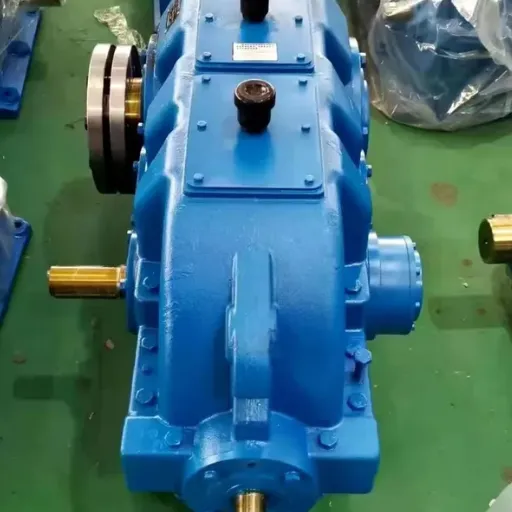
Ball mill reducers operate under severe loads. The materials and manufacturing processes separate industrial-grade units from light-duty gearboxes that will not survive in a mill.
Minimum quality indicators:
Case-hardened alloy steel gears, typically HRC 58–62
Precision ground or shaved tooth profiles for smooth load distribution
Rigid cast iron or welded steel housing to maintain alignment under load
Quality bearings sized for rated load and L10 life
Effective lubrication system matched to duty cycle and mounting position
Quality inspection records, including gear contact pattern checks, noise testing, and runout verification
Ask your supplier for material certificates and heat treatment documentation. Reputable manufacturers can trace materials back to the mill certificate and provide inspection reports for each reducer.
At Jiangsu Manqi Machinery, every ball mill reducer undergoes multi-stage quality inspection before shipment. This includes gear contact pattern checks, noise testing, and runout verification. We provide documentation on request because we know procurement teams and plant engineers need proof, not promises.
Learn more about our manufacturing and quality processes on our about page.
Standard Models vs. Custom Ball Mill Reducers
One of the most important decisions in ball mill reducer selection is whether a catalog model will work or whether you need a custom-engineered unit.
When a Standard Model Works
If your mill parameters match a catalog series, a standard reducer is usually the fastest and most cost-effective choice. A cement mill reducer from a standard series can often ship faster and cost less than a custom unit. Standard series include:
MBY/MBYX series for edge-drive ball mills and raw meal mills
JDX series for center-drive mills
ZD series as auxiliary or smaller mill drives
Standard models offer proven designs, shorter lead times, and lower unit cost. They are ideal for new installations that follow common mill sizes and for straightforward replacement projects.
When You Need a Custom Reducer
Custom or non-standard reducers make sense when:
The mill footprint differs from standard designs
Shaft orientation, center height, or bolt pattern is unique
Load profile or torque requirement exceeds catalog ratings
You are retrofitting a reducer into an existing mill with tight constraints
The application involves unusual ambient conditions such as high dust, temperature, or humidity
You need special lubrication, cooling, or sealing arrangements
At Jiangsu Manqi Machinery, our engineering team reviews customer drawings and operating conditions to design custom reducers for these exact situations. We produce drawing approvals before manufacturing so you can verify dimensions and interfaces.
Need a reducer tailored to your mill layout? Contact our engineering team with your specifications, and we will recommend a standard or custom solution.
Common Ball Mill Reducer Selection Mistakes
Even experienced engineers can make selection errors when schedules are tight or documentation is incomplete. Here are the most common mistakes and how to avoid them.
Undersizing the Reducer
Selecting a reducer based only on motor power without adequate service factor often leads to early tooth pitting, bearing failure, or shaft fatigue. Always include operating conditions in the selection calculation.
Ignoring Thermal Limits
Continuous operation generates heat. If the reducer cannot dissipate heat effectively, lubricant breaks down and gear life drops. Confirm that the selected unit is rated for your duty cycle and ambient temperature.
Poor Alignment During Installation
Even a high-quality reducer will fail if misaligned. Follow the supplier's alignment tolerances for coupling and pinion interfaces. Use proper shimming and check alignment after the mill has settled under load.
Skipping Commissioning Checks
Before full-load operation, check oil level, rotation direction, vibration, noise, and bearing temperatures. Early detection of issues prevents catastrophic failure later.
Neglecting Spare Parts Availability
For critical mills, confirm that spare gears, bearings, and seals are available for the reducer series you select. A reducer with no spare parts support can turn a minor repair into a major procurement exercise.
Key Questions to Ask Your Reducer Supplier
Before placing an order, confirm the following:
Can you provide material and heat treatment certificates?
What inspection and testing does each reducer undergo?
Do you offer dimensional drawings for approval before production?
What is your typical lead time for standard and custom units?
What after-sales support do you provide for installation and commissioning?
Can you supply spare parts for the reducer series?
What packaging and shipping method do you use for export orders?
Can you customize shaft, flange, or housing dimensions for my mill?
A supplier who answers these clearly and confidently is more likely to deliver a reliable product. At Jiangsu Manqi Machinery, we welcome these questions because they reflect the same engineering rigor we apply in our own factory.
Frequently Asked Questions About Ball Mill Reducer Selection
How do I know if I need an edge drive or center drive reducer?
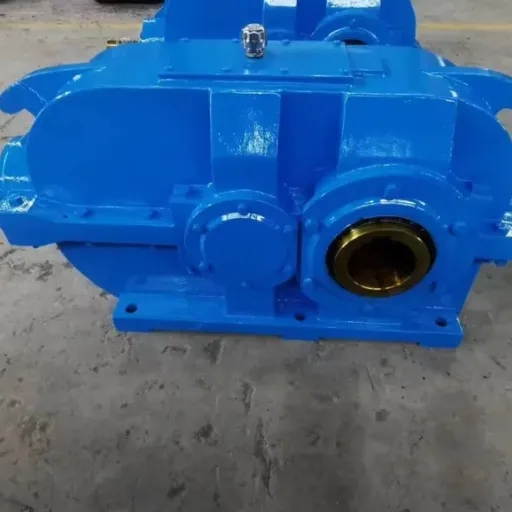
Match the reducer to your existing mill drive arrangement. Edge-drive mills use a pinion and girth gear beside the drum and typically require an MBY/MBYX series reducer. Center-drive mills locate the drive at the drum center and typically require a JDX series reducer. If you are designing a new mill, consult the mill manufacturer to confirm the optimal layout.
What service factor should I use for a ball mill reducer?
For most ball mill applications, use a service factor between 1.5 and 2.5. The exact value depends on mill size, media load, material hardness, operating hours, and startup frequency. When in doubt, choose a higher service factor.
Can I replace my ball mill reducer with a different brand?
Yes, but only if the replacement unit matches the original in torque capacity, reduction ratio, mounting dimensions, and shaft configuration. Dimensional equivalence is especially important for replacement projects to avoid foundation or coupling modifications.
How long should a ball mill reducer last?
With proper selection, installation, lubrication, and maintenance, a heavy-duty ball mill reducer can last 10 to 20 years or more. Premature failure usually results from undersizing, poor alignment, inadequate cooling, or contaminated lubricant rather than manufacturing defects.
What information do I need to request a ball mill reducer quotation?
Provide the motor power and speed, target drum speed or reduction ratio, drive arrangement, mounting dimensions, service factor, ambient conditions, and any special requirements. The more complete your information, the more accurate the quotation and recommendation will be.
Conclusion
Ball mill reducer selection is a multi-step engineering decision, not a simple catalog lookup. Start by confirming your drive arrangement and choosing the right reducer family: MBY/MBYX for edge drive, JDX for center drive. Then calculate the actual torque requirement, apply a realistic service factor, match the reduction ratio, verify every mounting dimension, and confirm material and inspection standards. Finally, decide whether a standard model or a custom-engineered unit is the better fit for your mill.
The mining engineer in Chile learned this the hard way, but you do not have to. A methodical selection process, supported by an experienced supplier, prevents the failures that interrupt production and inflate maintenance budgets.
At Jiangsu Manqi Machinery, we manufacture MBY, MBYX, JDX, ZD, and custom ball mill reducers from our facility in Taixing City. Our engineering team reviews drive parameters, operating conditions, and installation constraints before recommending a model. If you are specifying a reducer for a new mill or replacing an existing unit, send us your requirements and we will provide a technical recommendation and quotation.
Ready to select your ball mill reducer? Contact our engineering team with your mill parameters, and we will recommend the right model or custom solution.
Recently Posted
-
NGW Planetary Gear Reducer: A Selection Guide for Compact High-Torque Drives
July 30, 2026An NGW planetary gear reducer is a single-stage epicyclic gearbox that uses a central sun gear, planet gears, and an internal ring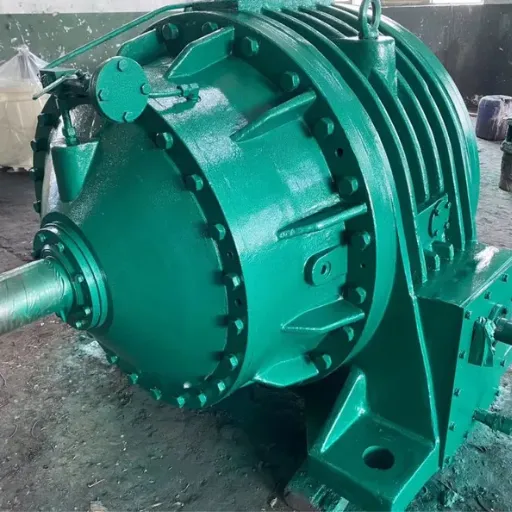 Read More
 -
Heavy Duty Planetary Reducer: A Guide for High-Torque Industrial Drives
July 30, 2026A heavy duty planetary reducer is the right choice when you need high output torque, shock-load capacity, and a compact footprint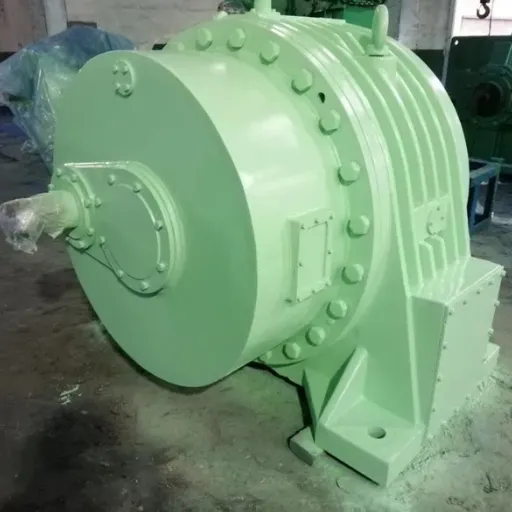 Read More
 -
Planetary Gear Motor: A Complete Engineer's Guide to Selection and Application
July 30, 2026A planetary gear motor is a compact drive solution that pairs a planetary gear reducer with an electric motor to deliver high outp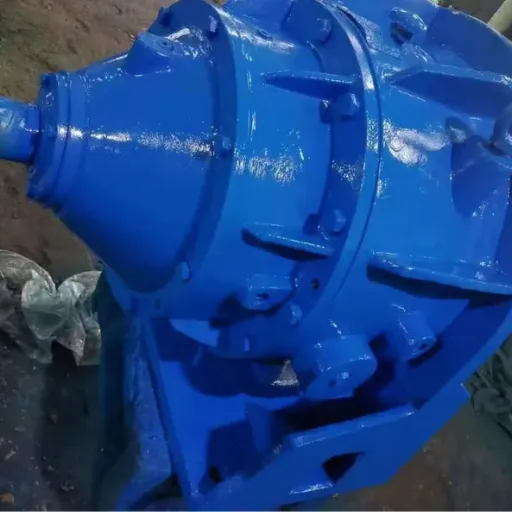 Read More
 -
High Torque Planetary Reducer: A Selection Guide for Heavy-Duty Industrial Drives
July 30, 2026A high torque planetary reducer is a compact drive system that distributes heavy loads across multiple planet gears meshing with a Read More

Contact Us
Recommended Products
-
 Kf127 Series Helical-Bevel Gear Motors for Industrial Power TransmissionNegotiableMOQ: 1 Set
 -
H1SH11 Modular Gearbox for Coal Mining Machinery With Cast Steel Housing and Mill Test ReportNegotiableMOQ: 1 Set
-
NGW101 Planetary Gear Reducer With Integral Flange Mount, 40Nm TorqueNegotiableMOQ: 1 Piece
-
Shanghai Dongfang DFSS400-520/4 Industrial Centrifugal Pump Wear RingNegotiableMOQ: 10 Pieces
-
SLOW300-550 High Hardness Shaft Bushing Spare Parts Matching Shanghai Liancheng Water Pump AccessoriesNegotiableMOQ: 1 Piece
-
Shanghai Kaiquan KQSN300-X13A/390 Original Pump Seal Ring Spare PartNegotiableMOQ: 10 Pieces
-
Shanghai Dongfang IHH100-65-250 Chemical Pump Anti-Corrosion Seal RingNegotiableMOQ: 10 Pieces
-
Shanghai Dongfang DFSS600-24N/6 Wear Spare Ring for DFSS Water PumpNegotiableMOQ: 10 Pieces
-
Coaxial Parallel Shaft Gearbox Systems With Right Angle Spiral Bevel Helical Gear MotorsNegotiableMOQ: 1 Set
-
ZS125 Cylindrical Gear Reducer for Industrial Mixing ApplicationsNegotiableMOQ: 100 Sets
-
ZLY224 Cylindrical Gear Reducer With Hardened Steel Gears and 224mm Center DistanceNegotiableMOQ: 1 Piece
-
R87 Compact Inline Gear Motor Low Noise for Conveyor EquipmentNegotiableMOQ: 1 Set
-
NGW93 High Efficiency Low Vibration Planetary Gear Reducer For Machinery DriveNegotiableMOQ: 1 Piece
-
H1SH11 Modular Gear Reducers for CNC Machine IntegrationNegotiableMOQ: 1 Set
-
Gearmotor Converter System R/F/K/S Series Coaxial Parallel Shaft Gearbox Spiral Bevel MotorNegotiableMOQ: 1 Set
-
G3 Series Flange Mounted Helical Gear Motor Speed Reducer With Bevel GearboxNegotiableMOQ: 1 Set
-
Industrial Mixer Drive Solution With F Series Parallel Shaft Geared Motors F57 to F97NegotiableMOQ: 1 Set
-
Parallel Shaft Speed Reducer F Series, Models F57 F67 F77 F87 F97, IP55 Protection RatedNegotiableMOQ: 1 Set
-
Parallel Shaft Geared Motor F Series, F57-F97 With C-face Input Flange, 220V/380V OptionsNegotiableMOQ: 1 Set
-
Industrial ZSY630 Cylindrical Gear Reducer For Industrial Transmission EquipmentNegotiableMOQ: 1 Piece