Business License

Cement Ball Mill Reducer: Selection, Types, and Maintenance Guide
A cement ball mill reducer converts high-speed, low-torque motor power into the slow, high-torque rotation a cement mill needs to grind clinker, raw meal, or slag. For most cement plants, the right choice is an MBY or MBYX series edge-drive reducer when the motor drives a pinion around the mill's girth gear, or a JDX series center-drive reducer when the drive is located at the center of the mill drum. Selecting the correct unit, sizing it for the real duty cycle, and maintaining it properly are what separate years of reliable grinding from unplanned downtime and premature gear failure.
What if the reducer you are about to order is already undersized for the load it will actually see? That question keeps many plant engineers awake at night, and for good reason. A cement ball mill reducer operates under continuous heavy load, thermal stress, and shock from grinding media. The wrong specification does not just wear out faster. It can damage the mill pinion, increase power consumption, and stop production without warning.
We agree that reliability matters more than a low purchase price. In this guide, you will learn how cement ball mill reducers work, how to choose between edge drive and center drive, what specifications matter most, and how to maintain the unit for a long service life. We will also cover common failure modes and when a custom reducer is the smarter path.
Key Takeaways
Cement ball mill reducers are matched to drive arrangement: MBY/MBYX for edge drive and JDX for center drive.
Required output torque, service factor, and reduction ratio must be calculated from real mill loads, not just motor nameplate data.
Case-hardened alloy steel gears (HRC 58-62), rigid housings, and quality bearings are the minimum for continuous cement duty.
Misalignment, poor lubrication, and thermal overload cause most premature failures.
Custom or non-standard reducers are the right choice when footprint, shaft arrangement, or load profile differs from catalog designs.
What Does a Cement Ball Mill Reducer Actually Do?
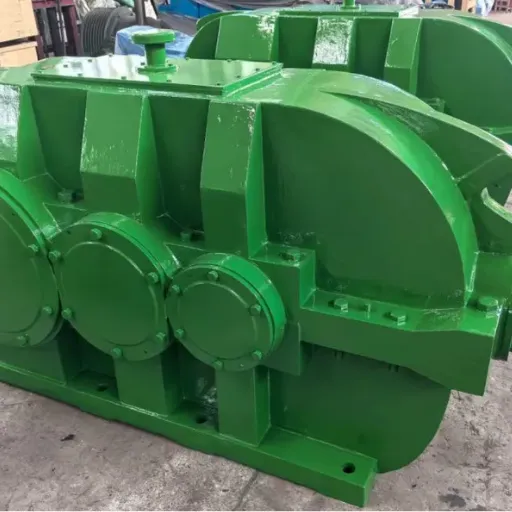
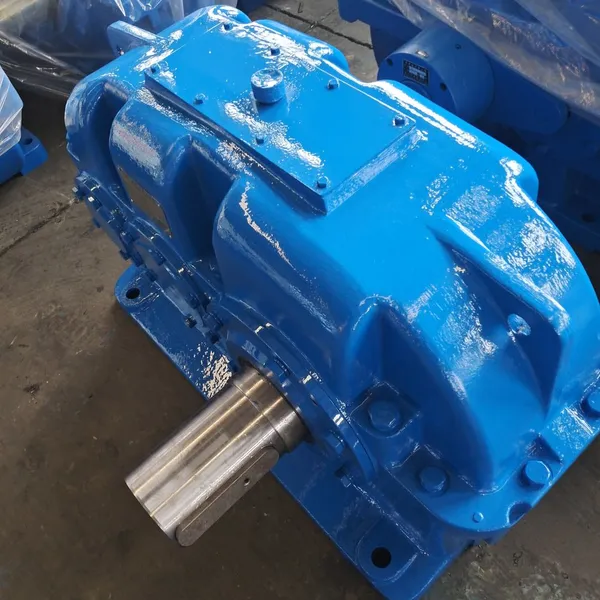
A cement ball mill reducer sits between the electric motor and the mill drum. The motor typically runs at 740, 990, or 1,480 rpm, while the mill drum turns at 12 to 25 rpm. The reducer multiplies torque and reduces speed so the drum can lift grinding media and crush clinker or raw materials.
Because the cement grinding process is continuous and abrasive, the reducer must withstand:
High torque over long duty cycles
Shock loads from cascading steel balls or rollers
Thermal stress from friction and ambient heat
Radial and axial forces transmitted through the pinion or central drive
Vibration and misalignment from the mill body and foundation
The reducer also influences overall drive efficiency, noise levels, and maintenance intervals. In other words, it is not simply a speed reducer. It is a load-bearing component that directly affects plant productivity.
Engineering Note
Always size a cement ball mill reducer for output torque at the mill drum, not just motor kW. Motor power tells only part of the story.
When Luis, a maintenance manager at a Colombian cement plant, replaced a failed reducer in 2024, he discovered the original unit had been selected using motor power alone. The service factor was too low for the actual shock loads from the limestone feed. The new reducer, sized with a service factor of 2.2, has now run for 18 months without abnormal wear. The difference was not the brand. It was the calculation.
Edge Drive vs. Center Drive: Which Arrangement Do You Have?
The first step in cement ball mill reducer selection is identifying the mill's drive arrangement. This single decision narrows the reducer choice dramatically.
Edge Drive Mills
In an edge drive arrangement, the motor and reducer sit beside the mill drum. The reducer output shaft drives a small pinion that meshes with a large girth gear ring bolted around the mill shell. Edge drive is common in smaller and mid-size cement mills, as well as many raw meal and coal mills.
Typical reducer choice: MBY or MBYX series edge-drive mill reducer.
These units are built with high torque capacity, rigid housings, and output shafts designed to drive the mill pinion. The MBY series is widely used in cement raw meal mills, cement mills, and coal mills where the girth-gear arrangement is practical.
Center Drive Mills
In a center drive arrangement, the drive system is located at the center of the mill drum. This layout is common in larger modern mills because it distributes loads more evenly and eliminates the large girth gear.
Typical reducer choice: JDX series center-drive mill reducer.
JDX reducers absorb heavy radial and axial loads and are engineered for the central drive configurations found in large cement mills and mining ball mills. They are often supplied with auxiliary drives for inching and maintenance rotation.
Which One Do You Need?
If you are replacing an existing reducer, match the original drive arrangement. If you are designing a new mill, consult the mill supplier or an experienced reducer manufacturer. Changing from edge drive to center drive, or vice versa, affects the mill structure, foundation, and gear design. It is not a simple reducer swap.
| Feature | Edge Drive | Center Drive |
|---|---|---|
| Motor/reducer location | Beside the mill drum | At the center of the drum |
| Power transmission | Pinion meshes with girth gear | Direct central drive |
| Common mill sizes | Small to mid-size mills | Large modern mills |
| Typical reducer | MBY/MBYX series | JDX series |
| Maintenance access | Easier side access | Compact, central layout |
Want to see how edge drive and center drive compare in more detail? Read our complete guide to ball mill reducer selection.
Key Specifications for a Cement Ball Mill Reducer
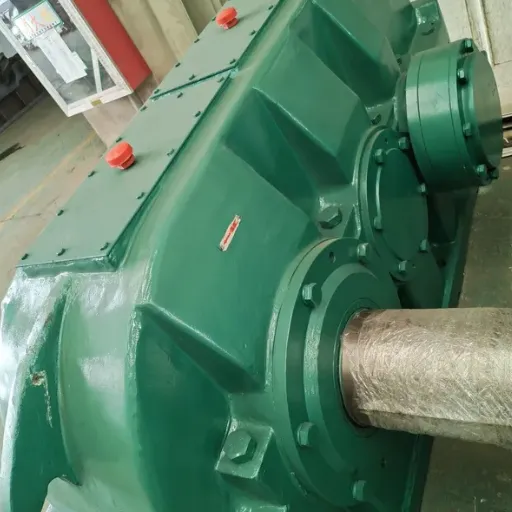
Selecting a cement ball mill reducer requires more than matching a model number. The following specifications must be confirmed before any order is placed.
Output Torque and Service Factor
Output torque is the force the reducer must deliver at the mill drum speed. It is calculated from the grinding load, media weight, and mill dimensions. The service factor adds a safety margin for shock, load variation, operating hours, and starting conditions.
For cement ball mills, service factors typically range from 1.5 to 2.5, depending on:
Mill diameter and length
Media load and material hardness
Feed consistency and moisture
Daily operating hours
Frequency of starts and stops
A higher service factor costs more upfront. It costs far less than a reducer failure during peak production season.
Reduction Ratio
The reduction ratio is the relationship between motor speed and mill drum speed. Common drum speeds range from 12 to 25 rpm. Motors typically run at 740, 990, or 1,480 rpm. Some systems use a two-stage arrangement with a primary reducer followed by a pinion-girth gear stage.
Mounting and Footprint
The reducer must fit the foundation and interface with the motor and mill. Check:
Center height and base bolt pattern
Input shaft orientation and coupling type
Output shaft length, diameter, and keyway
Clearance for inspection and maintenance access
For replacement projects, a dimensionally equivalent unit minimizes installation time. For new mills, early coordination between the mill supplier and reducer manufacturer prevents redesign later.
Materials and Heat Treatment
A quality cement mill reducer operates under severe loads. Look for:
Case-hardened alloy steel gears (HRC 58-62 typical)
Precision-ground or shaved tooth profiles
Rigid cast iron or welded steel housing
Quality bearings sized for rated load and L10 life
Ask your supplier for material certificates and heat treatment documentation. These details separate industrial-grade units from light-duty reducers that will not survive cement duty.
Main Reducer Series Used in Cement Plants
MBY/MBYX Series Edge-Drive Mill Reducers
The MBY ball mill reducer is the standard choice for edge-drive ball mills, raw meal mills, and coal mills. These reducers feature high torque capacity, rigid housings, and output shafts designed to drive the mill pinion. MBYX variants offer additional configuration options for specific mill layouts.
JDX Series Center-Drive Mill Reducers
The JDX mill reducer is engineered for center-drive cement mills and large mining ball mills. These units handle the radial and axial loads of central drive systems and are built for continuous heavy-duty operation. Some plants also refer to this style of unit as a ball mill gearbox when the drive is integrated directly with the mill motor.
ZD Series Auxiliary Drives
ZD series single-stage cylindrical reducers are often used as auxiliary drives, inching drives, or smaller mill drives. They provide a simple, robust solution when torque requirements are lower.
Custom and Non-Standard Reducers
When standard dimensions or load ratings do not fit, a custom reducer can be engineered to match the customer's drawings and operating conditions. This option is common for retrofits, upgrades, and unusual mill layouts.
You can explore the full range in our gear reducer catalog.
How to Select the Right Cement Ball Mill Reducer
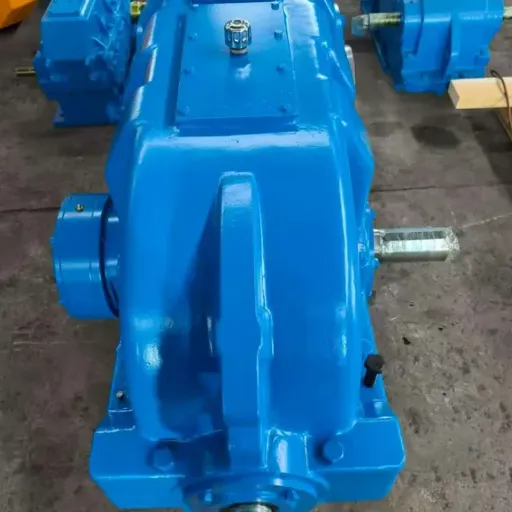
Follow this step-by-step process to specify a cement ball mill reducer that matches your mill and duty cycle.
1. Document the Mill Parameters
Collect the following information:
Motor power (kW) and speed (rpm)
Mill drum diameter and length
Required drum speed (rpm)
Material being ground (clinker, raw meal, slag, coal)
Daily operating hours
Ambient temperature and dust conditions
2. Calculate Output Torque and Service Factor
Use the mill parameters to calculate the required output torque. Apply a service factor appropriate for the shock and variability of the application. When in doubt, use a higher service factor.
3. Choose the Drive Arrangement
Match the reducer to the mill's edge drive or center drive layout. This determines whether you need an MBY/MBYX or JDX series unit.
4. Confirm the Reduction Ratio
Select a reducer ratio that brings motor speed down to the required drum speed. Remember that some edge-drive systems use an additional pinion-girth gear reduction stage.
5. Verify Mounting and Interfaces
Check that the reducer center height, bolt pattern, shaft dimensions, and coupling arrangement match the installation. Request dimensional drawings for approval before production.
6. Specify Quality and Inspection Requirements
Confirm material grades, heat treatment, inspection procedures, and documentation. Reputable suppliers provide material certificates, test reports, and dimensional drawings.
When a procurement team at a Southeast Asian cement plant ordered a replacement reducer in 2023, they sent only the motor power and model number. The supplier delivered a unit that fit the foundation but was undersized for the torque demand. Within eight months, the gears showed pitting and the bearings ran hot.
The second order included full mill parameters, a service factor of 2.0, and approved drawings. That unit is still running cleanly today.
Need help with the calculation? Contact our engineering team with your mill parameters and we will recommend the right reducer model or custom solution.
Installation and Maintenance Best Practices
Even a well-specified cement ball mill reducer will fail if it is installed or maintained incorrectly. Pay attention to the following areas.
Alignment
Misalignment between the motor, reducer, and pinion causes uneven load distribution, vibration, and premature bearing failure. Follow the supplier's alignment tolerances for coupling and pinion interfaces. Laser alignment is recommended for new installations and after any foundation work.
Lubrication
Use the lubricant grade and fill volume specified by the manufacturer. Check oil level regularly and analyze oil samples at scheduled intervals. Contaminated or degraded oil accelerates gear and bearing wear. For continuous-duty mills, consider oil filtration or cooling systems if operating temperatures are high.
Cooling and Ventilation
Cement plants are hot and dusty. Ensure the reducer has adequate ventilation and is not blocked by structures or accumulated dust. If the reducer runs above its rated temperature, lubricant life drops and thermal expansion can affect gear mesh.
Commissioning Checks
Before full-load operation, verify:
Oil level and lubricant type
Rotation direction
Coupling and pinion alignment
Vibration and noise baseline
Bearing temperature baseline
Record these values. Future inspections will reveal trends before they become failures.
Scheduled Inspections
Plan regular inspections for oil condition, seal condition, vibration, noise, and bearing temperature. Trend monitoring catches problems early and allows maintenance during planned shutdowns instead of emergency stops.
Common Failure Modes and How to Avoid Them
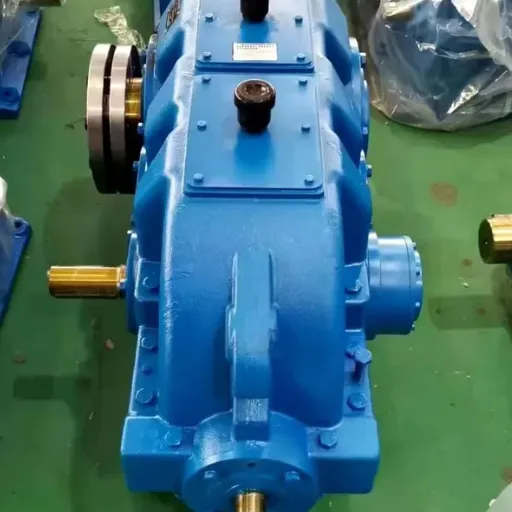
Understanding why cement ball mill reducers fail helps you prevent the same problems.
Tooth Pitting and Wear
Pitting appears as small craters on gear tooth surfaces. It is usually caused by insufficient surface hardness, inadequate lubrication, or overload. Use case-hardened gears with HRC 58-62 hardness and confirm the service factor is adequate.
Bearing Failure
Bearing failures often result from misalignment, contamination, or inadequate lubrication. Maintain clean oil, align couplings properly, and replace seals before they leak.
Thermal Overload
Continuous operation generates heat. If the reducer cannot dissipate heat, oil viscosity drops and gear life decreases. Confirm the unit is rated for your ambient temperature and duty cycle. Add cooling if necessary.
Shaft Fatigue
Shaft fatigue occurs when cyclic loads exceed the shaft's endurance limit. It is often caused by undersizing, poor alignment, or resonance. Use a reducer with properly sized shafts and confirm alignment after installation.
Seal Leakage
Leaking seals allow dust and moisture into the reducer and oil out. Replace seals on schedule and keep the breather clean so pressure does not build inside the housing.
When a Custom Cement Ball Mill Reducer Makes Sense
Standard catalog reducers work well when mill parameters match common designs. However, some situations require a custom or non-standard reducer.
Consider a custom design when:
The mill footprint differs from standard designs
Shaft orientation, center height, or bolt pattern is unique
The torque or load profile exceeds catalog ratings
You are retrofitting a reducer into an existing mill with tight constraints
The application involves unusual ambient conditions such as high dust, temperature, or humidity
You need to match an obsolete reducer that is no longer manufactured
At Jiangsu Manqi Machinery, our engineering team reviews customer drawings and operating conditions to design custom reducers for these exact situations. We produce drawing approvals before manufacturing so you can verify dimensions and interfaces.
A plant engineer in North Africa faced exactly this problem in 2022. His vintage cement mill used a reducer that was no longer produced, and the foundation could not accept a standard replacement. Our team designed a custom unit with modified shaft extensions and a special mounting foot pattern. The reducer dropped into place during the plant's scheduled shutdown and has operated without issue since.
Ready to explore a custom solution? Send us your drawings and requirements for a technical proposal and quotation.
Frequently Asked Questions
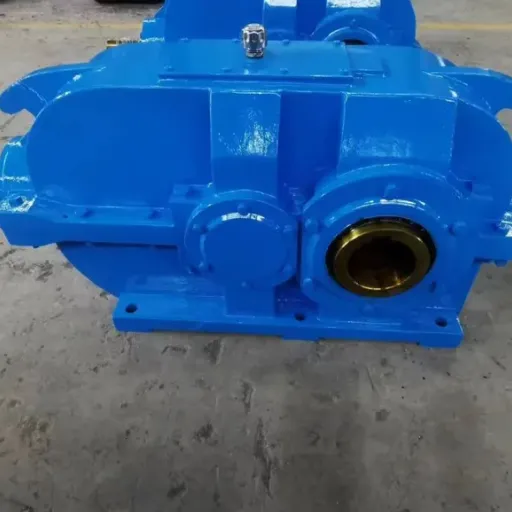
What reducer is used for a cement ball mill?
For edge-drive cement ball mills, the MBY or MBYX series reducer is commonly used. For center-drive mills, the JDX series is the standard choice. The right model depends on drive arrangement, torque, speed ratio, and mounting constraints.
How do I size a cement ball mill reducer?
Start with motor power and speed, mill dimensions, and required drum speed. Calculate output torque, apply a service factor of 1.5 to 2.5 based on operating conditions, and select a reducer series that matches your drive arrangement.
What is the service factor for a cement ball mill reducer?
Service factors for cement ball mills typically range from 1.5 to 2.5. Higher values are used for larger mills, harder materials, frequent starts and stops, and continuous 24-hour operation.
Can a cement ball mill reducer be repaired?
Many failures can be repaired by replacing bearings, seals, or damaged gears. However, if the original unit was undersized or the housing is damaged, replacement may be more cost-effective than repeated repairs.
How long should a cement ball mill reducer last?
With correct selection, alignment, lubrication, and maintenance, a cement ball mill reducer can last 10 to 20 years or more. Harsh conditions and undersizing reduce service life significantly.
Conclusion
Selecting the right cement ball mill reducer starts with understanding your drive arrangement, calculating real torque and service factor requirements, and matching those to a proven reducer series. Edge-drive cement mills typically use MBY or MBYX series reducers. Center-drive mills call for JDX series units. When standard dimensions or loads do not fit, a custom reducer engineered to your drawings and conditions is the safer path.
At Jiangsu Manqi Machinery, we manufacture MBY, MBYX, JDX, ZD, and custom cement ball mill reducers from our facility in Taixing City. Our engineering team reviews your drive parameters, ambient conditions, and maintenance access before recommending a standard or custom solution. We also support you with drawings, inspection reports, and after-sales technical guidance.
Ready to select your cement ball mill reducer? Contact our engineering team with your mill parameters, and we will provide a technical recommendation and quotation.
Recently Posted
-
NGW Planetary Gear Reducer: A Selection Guide for Compact High-Torque Drives
July 30, 2026An NGW planetary gear reducer is a single-stage epicyclic gearbox that uses a central sun gear, planet gears, and an internal ring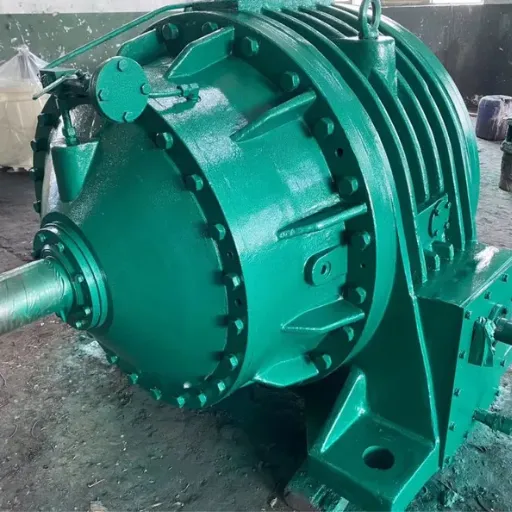 Read More
 -
Heavy Duty Planetary Reducer: A Guide for High-Torque Industrial Drives
July 30, 2026A heavy duty planetary reducer is the right choice when you need high output torque, shock-load capacity, and a compact footprint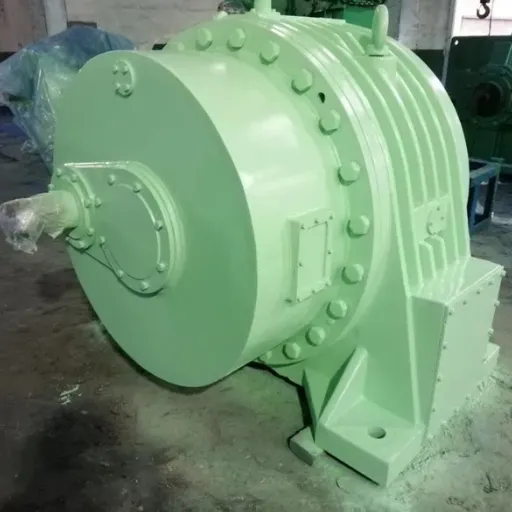 Read More
 -
Planetary Gear Motor: A Complete Engineer's Guide to Selection and Application
July 30, 2026A planetary gear motor is a compact drive solution that pairs a planetary gear reducer with an electric motor to deliver high outp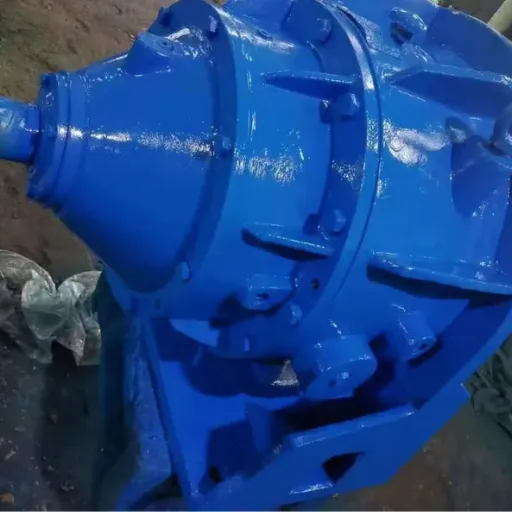 Read More
 -
High Torque Planetary Reducer: A Selection Guide for Heavy-Duty Industrial Drives
July 30, 2026A high torque planetary reducer is a compact drive system that distributes heavy loads across multiple planet gears meshing with a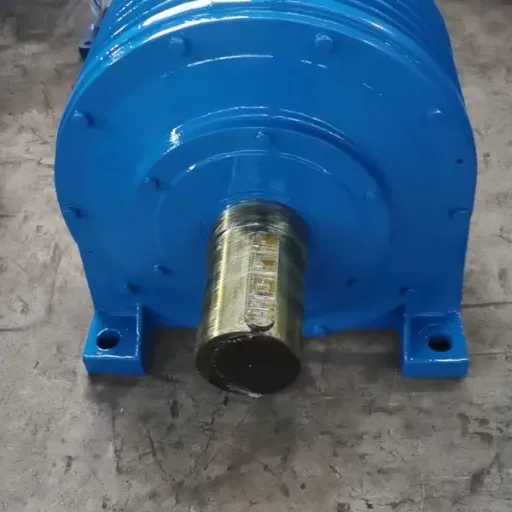 Read More

Contact Us
Recommended Products
-
 Kf127 Series Helical-Bevel Gear Motors for Industrial Power TransmissionNegotiableMOQ: 1 Set
 -
H1SH11 Modular Gearbox for Coal Mining Machinery With Cast Steel Housing and Mill Test ReportNegotiableMOQ: 1 Set
-
NGW101 Planetary Gear Reducer With Integral Flange Mount, 40Nm TorqueNegotiableMOQ: 1 Piece
-
Shanghai Dongfang DFSS400-520/4 Industrial Centrifugal Pump Wear RingNegotiableMOQ: 10 Pieces
-
SLOW300-550 High Hardness Shaft Bushing Spare Parts Matching Shanghai Liancheng Water Pump AccessoriesNegotiableMOQ: 1 Piece
-
Shanghai Kaiquan KQSN300-X13A/390 Original Pump Seal Ring Spare PartNegotiableMOQ: 10 Pieces
-
Shanghai Dongfang IHH100-65-250 Chemical Pump Anti-Corrosion Seal RingNegotiableMOQ: 10 Pieces
-
Shanghai Dongfang DFSS600-24N/6 Wear Spare Ring for DFSS Water PumpNegotiableMOQ: 10 Pieces
-
Coaxial Parallel Shaft Gearbox Systems With Right Angle Spiral Bevel Helical Gear MotorsNegotiableMOQ: 1 Set
-
ZS125 Cylindrical Gear Reducer for Industrial Mixing ApplicationsNegotiableMOQ: 100 Sets
-
ZLY224 Cylindrical Gear Reducer With Hardened Steel Gears and 224mm Center DistanceNegotiableMOQ: 1 Piece
-
R87 Compact Inline Gear Motor Low Noise for Conveyor EquipmentNegotiableMOQ: 1 Set
-
NGW93 High Efficiency Low Vibration Planetary Gear Reducer For Machinery DriveNegotiableMOQ: 1 Piece
-
H1SH11 Modular Gear Reducers for CNC Machine IntegrationNegotiableMOQ: 1 Set
-
Gearmotor Converter System R/F/K/S Series Coaxial Parallel Shaft Gearbox Spiral Bevel MotorNegotiableMOQ: 1 Set
-
G3 Series Flange Mounted Helical Gear Motor Speed Reducer With Bevel GearboxNegotiableMOQ: 1 Set
-
Industrial Mixer Drive Solution With F Series Parallel Shaft Geared Motors F57 to F97NegotiableMOQ: 1 Set
-
Parallel Shaft Speed Reducer F Series, Models F57 F67 F77 F87 F97, IP55 Protection RatedNegotiableMOQ: 1 Set
-
Parallel Shaft Geared Motor F Series, F57-F97 With C-face Input Flange, 220V/380V OptionsNegotiableMOQ: 1 Set
-
Industrial ZSY630 Cylindrical Gear Reducer For Industrial Transmission EquipmentNegotiableMOQ: 1 Piece