Business License

Mining Ball Mill Reducer: A Selection Guide for Harsh Operations
The right mining ball mill reducer depends on your mill's drive arrangement, torque demands, and operating environment: MBY or MBYX series for edge-drive mining ball mills, JDX series for center-drive layouts, and custom-engineered units when footprint or load conditions fall outside standard ranges. Matching the reducer to these factors is what separates years of reliable grinding from premature tooth wear, bearing failure, and unplanned downtime.
What if the reducer you ordered looks perfect on paper but cannot survive the dust, shock loads, and continuous duty of a real mining site? Last year, a procurement team at a copper concentrator in Southeast Asia replaced a failed mill reducer with the cheapest catalog unit they could find. Within eight months, the gears showed pitting, oil temperatures climbed above 80°C, and an emergency shutdown cost the plant three days of production. The replacement they thought would save USD 8,000 ended up costing more than USD 40,000 in lost throughput and repairs.
This guide explains how mining ball mill reducers work, what makes them different from standard industrial gearboxes, and how to specify a unit that will hold up in the field.
Key Takeaways
Mining ball mill reducers must handle high torque, shock loads, dust, and continuous duty in remote sites.
Edge-drive mills typically use MBY or MBYX series reducers; center-drive mills use JDX series reducers.
Service factors for mining applications usually range from 1.8 to 2.5 due to media impact and feed variation.
Hardened alloy steel gears, rigid housings, and verified bearing L10 life separate industrial-grade units from light-duty alternatives.
Custom or non-standard reducers are the safest option when mill layout, shaft arrangement, or torque requirements deviate from catalog designs.
What Does a Mining Ball Mill Reducer Actually Do?
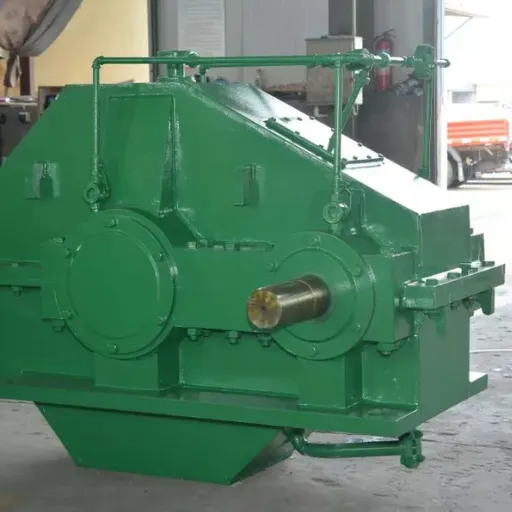
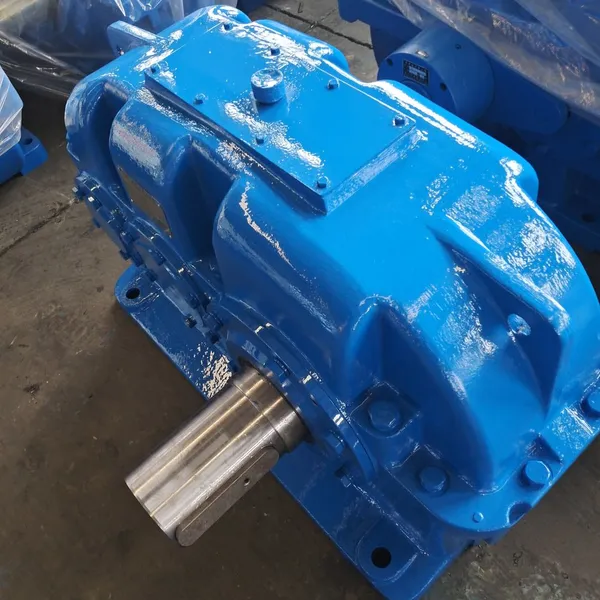
A mining ball mill reducer, also called a mining ball mill gearbox, converts high-speed, low-torque motor power into the low-speed, high-torque rotation the mill drum needs for grinding ore. The drum is heavy. The charge of steel balls and rock creates violent impact. The reducer runs for thousands of hours per year. It is the mechanical interface that must protect the motor, transfer torque reliably, and absorb the dynamic loads generated inside the mill.
Mining reducers differ from general industrial gearboxes in several ways:
Higher torque density: The reducer must deliver large output torque in a compact envelope.
Shock-load capacity: Media impacts and feed variations create intermittent overloads.
Continuous-duty rating: Many mining mills run 24 hours per day, seven days per week.
Contamination resistance: Dust seals, breather design, and oil filtration must handle abrasive mine environments.
Serviceability: Remote locations make maintenance difficult, so reliability and inspection access matter.
At Jiangsu Manqi Machinery, we manufacture MBY, MBYX, JDX, ZD, and custom mining ball mill reducers for cement, mining, and mineral processing plants worldwide.
Why Mining Ball Mill Reducers Face Extreme Demands
Mining ball mills are among the most punishing applications for any gear reducer. A heavy-duty mill reducer is not optional here. It is a requirement. Organizations like SME document the severe duty cycles and maintenance challenges common in mineral processing. Understanding these sources of stress helps engineers and procurement teams specify the right unit.
Massive Rotating Mass
A medium-size mining ball mill drum can weigh hundreds of tonnes. Once it is spinning, the inertia is enormous. The reducer must accelerate that mass during startup and hold it at steady speed during operation. Any undersizing shows up quickly as overheating, gear pitting, or bearing damage.
Variable and Impact Loads
The load inside a ball mill is never uniform. Feed rate changes, ore hardness varies, and steel balls cascade and impact the liner. These events create torque spikes that a steady-load reducer would not survive. This is why mining applications need higher service factors than typical conveyor or mixer drives.
Dust, Heat, and Contamination
Mine sites expose reducers to fine abrasive dust, high ambient temperatures, and limited shelter. Ingress protection, cooling, and lubrication quality become just as important as gear ratings. A reducer rated only for clean indoor conditions will fail prematurely on a concentrator floor.
Remote Locations and Downtime Cost
Many mining operations are in remote regions where replacement parts and specialist technicians are not quickly available. A reducer failure can halt an entire processing line. Reliability, therefore, is not just a technical preference. It is a financial requirement.
Edge Drive vs. Center Drive: Which Arrangement Do You Have?
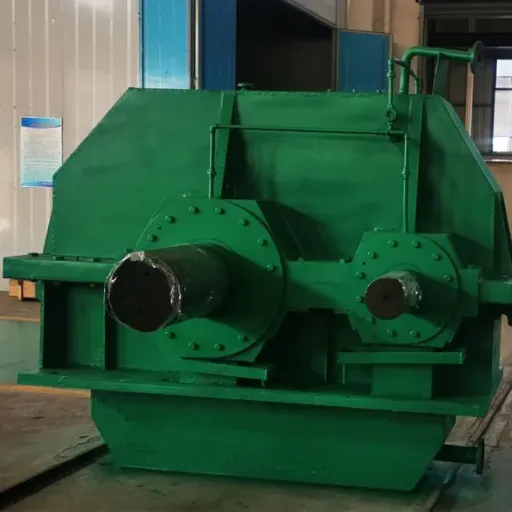
The first step in selecting a mining ball mill reducer is confirming the mill's drive arrangement. The wrong choice will not fit physically and will not distribute loads correctly.
Edge Drive Mining Ball Mills
In an edge-drive arrangement, the motor and reducer sit beside the mill drum. A pinion on the reducer output shaft meshes with a large girth gear ring bolted around the drum periphery. This design is common in smaller to mid-size mills and many legacy installations.
Typical reducer choice: MBY or MBYX series edge-drive mill reducer.
An edge drive ball mill reducer sits beside the drum and drives the pinion that meshes with the girth gear. These reducers are built with high torque capacity, rigid housings, and output shafts designed to drive the mill pinion. The MBY series is widely used in mining ball mills where edge drive is the preferred layout.
Center Drive Mining Ball Mills
In a center-drive arrangement, the drive system is located at the center of the mill drum. The reducer drives through a central gearbox or directly through the mill trunnion. This layout is common in larger modern mills because it distributes loads more evenly and reduces girth gear wear.
Typical reducer choice: JDX series center-drive mill reducer.
A center drive ball mill reducer mounts at the center of the drum and drives through a central gearbox or trunnion. JDX reducers are engineered to absorb heavy radial and axial loads. They are typically used in large mining ball mills and cement mills where edge drive would be impractical or where the mill manufacturer specifies center drive.
Which One Do You Need?
If you are replacing an existing reducer, match the original drive arrangement and footprint. If you are designing a new mill, consult the mill supplier or an experienced reducer manufacturer to confirm the optimal layout. Switching from edge drive to center drive is not a simple reducer swap. It changes the entire mechanical design of the mill.
How to Select a Mining Ball Mill Reducer
Selection should follow a logical sequence. Skipping steps is where mistakes happen. Whether you are choosing a standard ball mill drive reducer or a custom-engineered unit, the process is the same.
1. Define Motor Power and Input Speed
Start with the motor rated power in kilowatts and the input speed in rpm. These determine the baseline torque demand and the required reduction ratio. Common mining mill motors run at 740, 990, or 1,480 rpm.
2. Calculate Required Output Torque
Output torque is the critical figure. The reducer must deliver enough torque at the drum speed to overcome the load, even under worst-case conditions. Drum speeds for mining ball mills typically range from 12 to 25 rpm.
3. Apply the Correct Service Factor
The service factor accounts for load variability, shock, operating hours, and startup conditions. For mining ball mills, service factors usually fall between 1.8 and 2.5, depending on:
Mill diameter and media load
Ore hardness and feed consistency
Daily operating hours
Frequency of starts and stops
Ambient temperature and altitude
Choosing a lower service factor to save money is a common and expensive mistake.
4. Confirm the Reduction Ratio
The reduction ratio is the relationship between motor speed and mill drum speed. Select a reducer that brings motor speed down to the required drum speed. Some mining mills use a two-stage arrangement with a primary reducer and a pinion-girth gear stage.
5. Check Mounting and Footprint
For replacement projects, dimensional equivalence is usually the fastest path. For new mills, early coordination between the mill supplier and reducer manufacturer prevents costly redesign. Verify:
Center height and base bolt pattern
Input shaft orientation and coupling type
Output shaft length, diameter, and keyway
Clearance for inspection and oil changes
6. Specify Materials and Heat Treatment
Mining ball mill reducers operate under severe loads. Key quality indicators include case-hardened alloy steel gears, typically HRC 58-62. Gear quality and inspection standards from AGMA and ISO provide a useful benchmark when evaluating suppliers.
Specifically, confirm:
Case-hardened alloy steel gears, typically HRC 58-62
Precision-ground or shaved tooth profiles
Rigid cast iron or welded steel housings
Bearings sized for rated load and verified L10 life
Always ask for material certificates and heat treatment documentation. These details separate industrial-grade reducers from units that will not survive in a mine.
Key Specifications to Verify Before Ordering
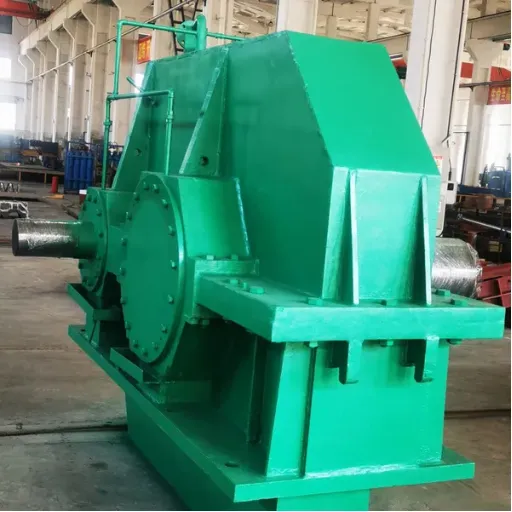
Before placing an order, confirm the following technical points with your supplier:
Rated output torque and service factor used in selection
Gear material, hardness, and heat treatment method
Housing material and stiffness under load
Bearing type, arrangement, and calculated L10 life
Lubrication method and recommended oil grade
Sealing and ingress protection rating
Noise and vibration test results
Dimensional drawings and approval process
Spare parts availability and lead time
Inspection and testing documentation provided
A supplier who can answer these questions clearly is more likely to deliver a reliable product.
Common Failure Modes and How to Avoid Them
Even a well-specified reducer can fail if selection, installation, or maintenance is neglected. Here are the most common failure modes in mining ball mill reducers and how to prevent them.
Tooth Pitting and Bending Fatigue
Pitting appears as small craters on the gear tooth surface. Bending fatigue shows as cracks at the tooth root. Both are usually caused by undersizing, inadequate hardness, or poor lubrication. Avoid them by selecting the correct service factor and confirming gear hardness and oil quality.
Bearing Overheating
High bearing temperatures often result from misalignment, inadequate lubrication, or overloading. During commissioning, monitor bearing temperatures and vibration. Address any readings above the supplier's limits before full-load operation.
Oil Leakage and Contamination
Leaks waste oil and allow dust ingress. Use the recommended seals, check breather function, and keep oil clean. In dusty mine environments, consider external filtration or oil cooling if the supplier recommends it.
Shaft Fatigue and Misalignment
Shaft failures usually start with misalignment between the reducer and the mill pinion or motor. Follow the supplier's alignment tolerances exactly. Laser alignment is worth the investment on large mining mills.
Standard Models vs. Custom Mining Ball Mill Reducers
When a Standard Model Works
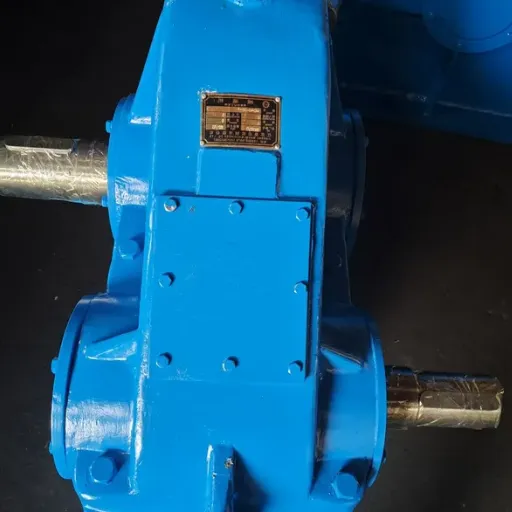
If your mill parameters match a catalog series, a standard reducer is usually the fastest and most cost-effective choice. Standard series include:
MBY/MBYX series for edge-drive mining and cement ball mills
JDX series for center-drive mills
ZD series as auxiliary or smaller mill drives
Standard models have proven designs, shorter lead times, and competitive pricing. They are ideal for new installations that follow common mill sizes.
When You Need a Custom Reducer
Custom or non-standard reducers make sense when:
The mill footprint differs from standard designs
Shaft orientation, center height, or bolt pattern is unique
Load profile or torque requirement exceeds catalog ratings
You are retrofitting a reducer into an existing mill with tight constraints
The application involves unusual ambient conditions such as high dust, temperature, or humidity
At Jiangsu Manqi Machinery, our engineering team reviews customer drawings and operating conditions to design custom reducers for these exact situations. We produce drawing approvals before manufacturing so you can verify dimensions and interfaces.
Mini-Story: The Custom Reducer That Saved a Shutdown
When the maintenance team at a gold mine in West Africa discovered cracks in their center-drive reducer housing, they faced a problem. The original manufacturer had discontinued the model, and no standard catalog reducer matched the existing foundation or shaft arrangement. Lead time for a new unit from the OEM was quoted at 26 weeks.
The mine sent their drawings and operating data to Jiangsu Manqi Machinery. Our engineers proposed a custom JDX-style center-drive reducer with modified mounting feet and output shaft dimensions to match the existing footprint. Drawing approval took two weeks. Manufacturing and testing took 12 weeks. The unit was installed during a scheduled maintenance shutdown, and vibration and temperature readings during commissioning were within specification.
The lesson: when standard units do not fit, a custom reducer designed to your drawings and conditions can restore production faster than chasing obsolete parts.
Why Work With an Experienced Mining Ball Mill Reducer Manufacturer
Not every gear reducer factory understands mining. Selecting a supplier with the right experience reduces procurement risk.
Application Engineering Support
An experienced manufacturer asks about your mill type, drive arrangement, ore characteristics, and ambient conditions before recommending a model. They do not simply sell you the closest catalog unit.
Quality Verification
Look for suppliers who provide material certificates, heat treatment records, gear inspection reports, and noise or vibration test data. Our quality control process includes multi-stage inspection at every production stage.
Customization Capability
Mining applications often require non-standard shaft arrangements, special seals, or modified housings. A manufacturer with in-house R&D and machining can respond faster than one that outsources everything.
Export and Logistics Experience
Mining projects are global. A supplier experienced in export packaging, documentation, and shipping through Shanghai port can reduce delays and customs complications.
Frequently Asked Questions
What reducer is used for mining ball mills?
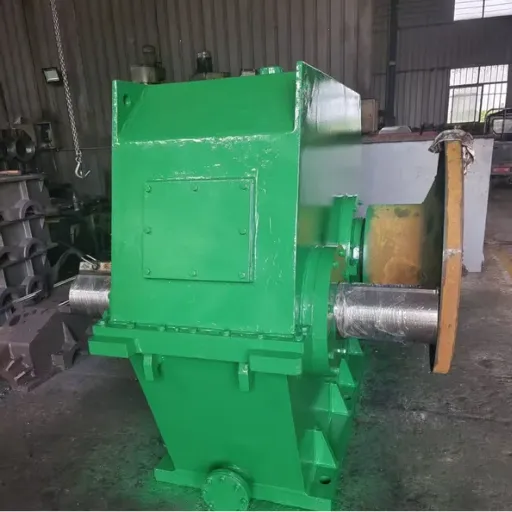
Mining ball mills typically use MBY or MBYX series reducers for edge-drive mills and JDX series reducers for center-drive mills. The choice depends on the mill's drive arrangement, torque requirements, and footprint.
How do I select a mining ball mill reducer?
Start with motor power, input speed, required output torque, and mill drum speed. Apply a service factor of 1.8 to 2.5 for mining conditions. Then confirm the reduction ratio, mounting dimensions, gear materials, and bearing life.
What is the service factor for a mining ball mill reducer?
Service factors for mining ball mills usually range from 1.8 to 2.5. The exact value depends on mill size, ore hardness, operating hours, starts and stops, and ambient conditions.
Can mining ball mill reducers be customized?
Yes. Custom or non-standard reducers can be engineered to match existing foundations, unique shaft arrangements, extreme loads, or harsh environments. Drawing approval before manufacturing ensures the unit fits.
How long does a mining ball mill reducer last?
With correct selection, proper installation, and regular maintenance, an industrial-grade mining ball mill reducer can last 10 to 20 years or more. Harsh conditions, undersizing, or neglected lubrication will shorten that life.
Conclusion
Mining ball mill reducers operate in some of the most demanding conditions in industry. Success starts with matching the reducer to the drive arrangement, calculating the real torque and service factor, and selecting a unit built with hardened gears, rigid housings, and bearings sized for the load. For edge-drive mills, MBY and MBYX series are the standard choice. For center-drive mills, JDX series is the proven solution. When standard dimensions or loads do not fit, a custom reducer engineered to your drawings is the safer path.
At Jiangsu Manqi Machinery Co., Ltd., we manufacture MBY, MBYX, JDX, ZD, and custom mining ball mill reducers from our facility in Taixing City. We support customers from reducer selection and customization through manufacturing, testing, and export logistics.
Ready to specify your mining ball mill reducer? Contact our engineering team with your mill parameters, and we will provide a technical recommendation and quotation.
Recently Posted
-
NGW Planetary Gear Reducer: A Selection Guide for Compact High-Torque Drives
July 30, 2026An NGW planetary gear reducer is a single-stage epicyclic gearbox that uses a central sun gear, planet gears, and an internal ring Read More
 -
Heavy Duty Planetary Reducer: A Guide for High-Torque Industrial Drives
July 30, 2026A heavy duty planetary reducer is the right choice when you need high output torque, shock-load capacity, and a compact footprint Read More
 -
Planetary Gear Motor: A Complete Engineer's Guide to Selection and Application
July 30, 2026A planetary gear motor is a compact drive solution that pairs a planetary gear reducer with an electric motor to deliver high outp Read More
 -
High Torque Planetary Reducer: A Selection Guide for Heavy-Duty Industrial Drives
July 30, 2026A high torque planetary reducer is a compact drive system that distributes heavy loads across multiple planet gears meshing with a Read More

Contact Us
Recommended Products
-
 Kf127 Series Helical-Bevel Gear Motors for Industrial Power TransmissionNegotiableMOQ: 1 Set
 -
H1SH11 Modular Gearbox for Coal Mining Machinery With Cast Steel Housing and Mill Test ReportNegotiableMOQ: 1 Set
-
NGW101 Planetary Gear Reducer With Integral Flange Mount, 40Nm TorqueNegotiableMOQ: 1 Piece
-
Shanghai Dongfang DFSS400-520/4 Industrial Centrifugal Pump Wear RingNegotiableMOQ: 10 Pieces
-
SLOW300-550 High Hardness Shaft Bushing Spare Parts Matching Shanghai Liancheng Water Pump AccessoriesNegotiableMOQ: 1 Piece
-
Shanghai Kaiquan KQSN300-X13A/390 Original Pump Seal Ring Spare PartNegotiableMOQ: 10 Pieces
-
Shanghai Dongfang IHH100-65-250 Chemical Pump Anti-Corrosion Seal RingNegotiableMOQ: 10 Pieces
-
Shanghai Dongfang DFSS600-24N/6 Wear Spare Ring for DFSS Water PumpNegotiableMOQ: 10 Pieces
-
Coaxial Parallel Shaft Gearbox Systems With Right Angle Spiral Bevel Helical Gear MotorsNegotiableMOQ: 1 Set
-
ZS125 Cylindrical Gear Reducer for Industrial Mixing ApplicationsNegotiableMOQ: 100 Sets
-
ZLY224 Cylindrical Gear Reducer With Hardened Steel Gears and 224mm Center DistanceNegotiableMOQ: 1 Piece
-
R87 Compact Inline Gear Motor Low Noise for Conveyor EquipmentNegotiableMOQ: 1 Set
-
NGW93 High Efficiency Low Vibration Planetary Gear Reducer For Machinery DriveNegotiableMOQ: 1 Piece
-
H1SH11 Modular Gear Reducers for CNC Machine IntegrationNegotiableMOQ: 1 Set
-
Gearmotor Converter System R/F/K/S Series Coaxial Parallel Shaft Gearbox Spiral Bevel MotorNegotiableMOQ: 1 Set
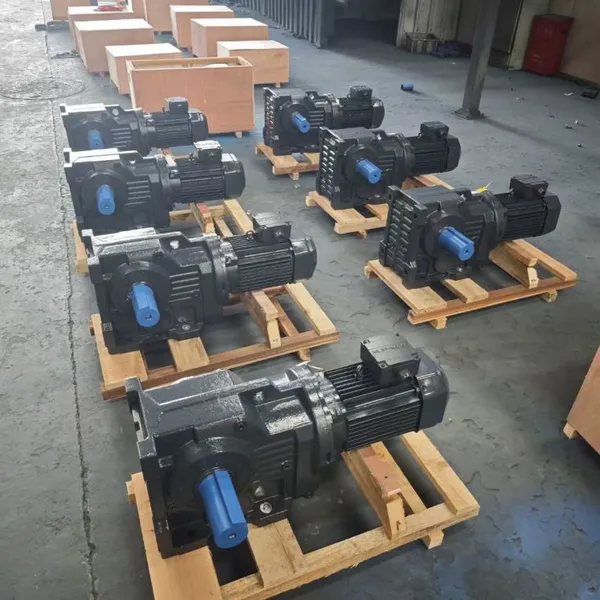
-
G3 Series Flange Mounted Helical Gear Motor Speed Reducer With Bevel GearboxNegotiableMOQ: 1 Set
-
Industrial Mixer Drive Solution With F Series Parallel Shaft Geared Motors F57 to F97NegotiableMOQ: 1 Set
-
Parallel Shaft Speed Reducer F Series, Models F57 F67 F77 F87 F97, IP55 Protection RatedNegotiableMOQ: 1 Set
-
Parallel Shaft Geared Motor F Series, F57-F97 With C-face Input Flange, 220V/380V OptionsNegotiableMOQ: 1 Set
-
Industrial ZSY630 Cylindrical Gear Reducer For Industrial Transmission EquipmentNegotiableMOQ: 1 Piece