Business License

How to Select a Slag Mill Reducer for Cement Plants
A slag mill reducer converts motor speed into the low-speed, high-torque rotation needed to grind blast furnace slag into fine powder for cement production. The right reducer must handle high torque, abrasive slag particles, vibration, and long continuous duty cycles while keeping the finish mill or vertical slag mill running reliably.
But slag grinding is harder on reducers than many cement plant engineers expect. A maintenance supervisor at a cement works in Vietnam once replaced a slag mill reducer after only 22 months. The gears looked intact, but the bearings had failed from contamination and thermal overload. The reducer had been sized for limestone grinding, not the abrasive, high-moisture slag that passed through the mill. This guide explains how to select a slag mill reducer that survives the dust, heat, and shock loads of real slag grinding operations.
Key Takeaways
Slag mill reducers must handle high torque, abrasive dust, vibration, and thermal stress from continuous slag grinding.
Vertical slag mills usually need specialized grinding table reducers; slag ball mills often use MBY or MBYX edge-drive reducers.
Service factors of 1.5 to 2.5 are typical depending on slag hardness, moisture, and operating hours.
Sealing, lubrication, and cooling are as important as torque capacity in slag mill environments.
Custom slag mill reducers solve footprint, shaft, and environmental sealing problems on retrofits.
What a Slag Mill Reducer Actually Does
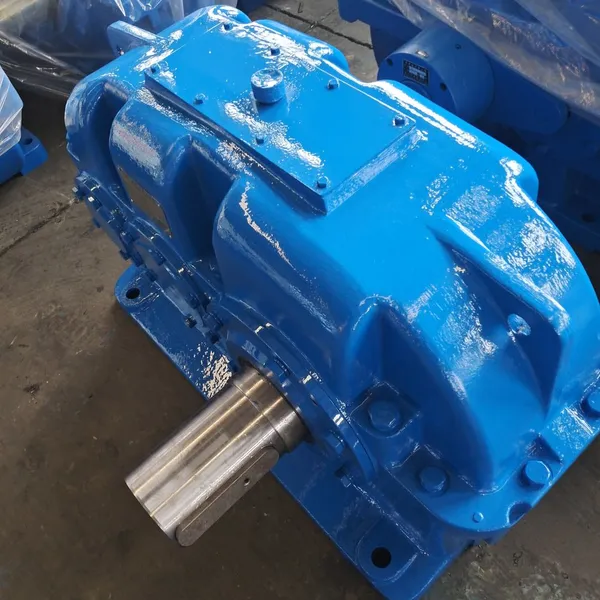
A slag mill reducer drives the grinding table, drum, or rollers that pulverize blast furnace slag into fine powder. In a cement plant, this ground granulated blast furnace slag (GGBFS) becomes a supplementary cementitious material blended with clinker. The reducer sits between the motor and the mill's drive mechanism, which may be a vertical grinding table, a horizontal ball mill, or a roller press arrangement.
Slag grinding creates severe operating conditions for the reducer:
High torque at low speed from the grinding media or table
Variable load as slag feed rate, hardness, and moisture change
Heavy vibration from the grinding process and mill structure
Abrasive slag dust that can contaminate lubricant and seals
Heat and moisture from the mill and surrounding process equipment
Because slag mills often run continuously to feed the cement blending system, reducer reliability directly affects cement production and finish grinding capacity.
Want to compare reducer options for heavy industrial drives? View our gear reducer catalog to see standard and custom slag mill reducer solutions.
Types of Slag Mill Reducers
Vertical slag mill reducers
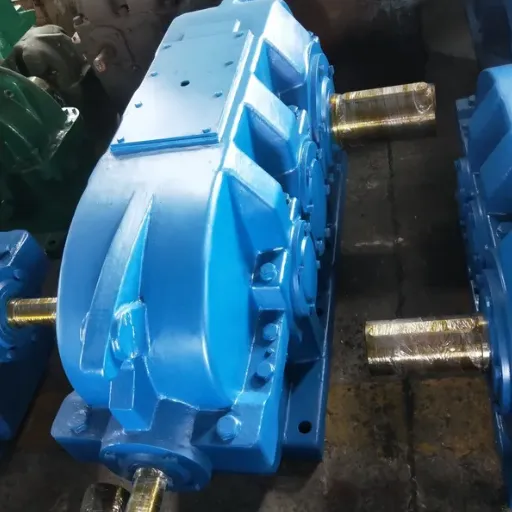
Vertical slag mills use a grinding table driven by a central or side-mounted gear unit. The reducer must absorb the radial and axial loads created by the grinding rollers pressing down on the table. These reducers are typically large, slow-speed units with high torque capacity and robust bearings.
Vertical slag mill reducers often require custom engineering because the mill manufacturer designs the drive interface around a specific gear unit. Replacement projects must match the original mounting, shaft orientation, and center height. The reducer must also handle the high table loads and vibration that come with slag grinding.
Slag ball mill reducers
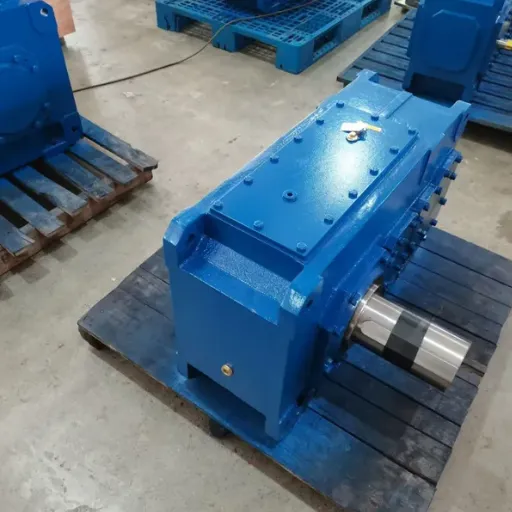
Horizontal slag ball mills and similar edge-drive designs use a pinion that meshes with a girth gear around the mill drum. The reducer output shaft drives the pinion. MBY and MBYX series reducers are commonly used for this layout because they combine high torque capacity, rigid housings, and output shafts designed for mill pinion drives.
These reducers are widely used in cement plant slag mills and similar grinding equipment. The main selection parameters are output torque, reduction ratio, service factor, and the ability to maintain accurate pinion alignment under load.
Slag grinding reducer arrangements
Some slag grinding systems use roller presses or combination circuits with separate reducer requirements. The reducer must match the specific drive arrangement, whether it drives a grinding roll, a separator, or an auxiliary mill component. Each application has unique torque, speed, and mounting requirements.
| Mill Type | Drive Arrangement | Typical Reducer | Key Requirement |
|---|---|---|---|
| Vertical slag mill | Table drive, central or side | Custom or specialized gear unit | Absorbs axial and radial loads |
| Slag ball mill | Edge drive, pinion-girth gear | MBY/MBYX series | High torque, accurate alignment |
| Roller press | Direct or gear drive | Planetary or cylindrical reducer | Compact torque, good sealing |
Key Selection Criteria for a Slag Mill Reducer
Output torque and service factor
Start with the required output torque at the mill. Slag grinding loads vary with slag hardness, moisture content, feed rate, and mill wear. For this reason, slag mill reducers should be sized with a service factor of at least 1.5 to 2.5, depending on:
Daily operating hours
Frequency of starts and stops
Slag hardness and abrasiveness
Mill condition and internal wear
Required availability and redundancy
A higher service factor reduces the risk of tooth pitting, bearing fatigue, and shaft failure. In continuous slag grinding duty, undersizing the reducer is a common cause of unplanned outages.
Dust sealing and contamination protection
Slag dust is abrasive and can destroy a reducer if it enters the housing. Effective sealing is essential. Look for:
Labyrinth seals that block dust without excessive friction
Rubber or felt seals in cleaner auxiliary areas
Breathers with filters to keep dust out of the oil reservoir
Sealed bearing housings where practical
Regular oil analysis to detect contamination early
When a cement plant in Turkey replaced a slag mill reducer after only 20 months, inspection showed that slag dust had mixed with the lubricating oil and formed an abrasive paste. The gear teeth and bearings had worn far faster than expected. The new reducer specification included upgraded seals and a scheduled oil sampling program.
Thermal rating and cooling
Slag mills generate heat, both from slag drying and from the grinding process itself. The reducer must dissipate heat effectively to prevent oil breakdown and thermal expansion that can affect gear mesh and bearing clearances. Confirm that the reducer's thermal rating matches the continuous duty conditions.
For high-temperature installations, options include:
Larger oil volume for thermal mass
External cooling coils or oil cooler
Forced lubrication system
High-temperature seals and gaskets
Mounting and footprint
For replacement projects, match the existing foundation, bolt pattern, center height, and shaft arrangement. For new mills, coordinate early with the mill supplier. A slag mill reducer that does not fit the mill interface creates costly delays during installation.
Always request dimensional drawings for approval before manufacturing. This step is especially important for custom or non-standard reducers.
Need help matching a reducer to your slag mill's torque and environment? Contact our engineers with your mill type, drive layout, and operating conditions for a technical recommendation.
Common Slag Mill Reducer Failures and Prevention
Lubricant contamination
Slag dust is the most common cause of premature reducer failure in slag mills. Once dust enters the oil, it acts as a grinding paste between gear teeth and bearing surfaces. Prevention requires effective seals, filtered breathers, and a proactive oil analysis program.
Tooth pitting and breakage
Pitting occurs when the gear surface cannot withstand repeated contact stress. It is usually caused by undersizing, poor material quality, or inadequate heat treatment. Breakage can follow pitting or result from shock loads. Case-hardened alloy steel gears with proper heat treatment are the standard for slag mill reducers.
Bearing failure
Bearings fail from overload, contamination, poor lubrication, or excessive heat. In slag mill reducers, all four factors can be present at once. Quality bearings sized for the actual load and L10 life, combined with clean oil and adequate cooling, are the best defense.
Misalignment and vibration
Slag mills vibrate. If the reducer is not rigidly mounted and properly aligned with the mill, vibration accelerates wear. A procurement team in India once installed a low-cost slag ball mill reducer that lacked the housing stiffness of the original unit. Vibration transmitted through the drive train caused bolt loosening and coupling damage within the first year.
When to Specify a Custom Slag Mill Reducer
Standard reducers work when the mill parameters match catalog specifications. Custom or non-standard slag mill reducers are needed when:
The mill has a unique footprint or bolt pattern
Shaft orientation, center height, or coupling arrangement differs from standard units
The operating environment requires enhanced sealing or cooling
The torque or service factor exceeds standard ratings
The project is a retrofit with limited space or access
At Jiangsu Manqi Machinery, we review customer drawings, operating conditions, and environmental requirements before designing a custom reducer. We provide dimensional drawings for approval before production, so you can verify mounting, interfaces, and clearances.
For example, when a cement plant in Eastern Europe needed to replace a vertical slag mill reducer, the original manufacturer had discontinued the model. Our engineering team measured the existing unit, matched the mounting and shaft interfaces, and produced a custom gear unit that fit without modifying the mill structure. The plant avoided a costly mill redesign and returned to full capacity.
FAQ
What is a slag mill reducer?
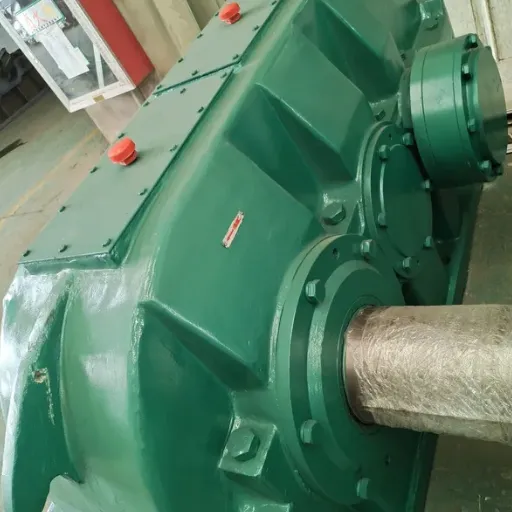
A slag mill reducer is a gearbox that reduces motor speed and increases torque to drive the grinding elements in a slag mill. It pulverizes blast furnace slag into fine powder for use as a cement additive or supplementary cementitious material.
What reducer is used in a slag mill?
Vertical slag mills often use specialized grinding table reducers designed for axial and radial loads. Slag ball mills commonly use MBY or MBYX series edge-drive reducers. Roller press and auxiliary systems may use planetary or heavy-duty cylindrical reducers.
What service factor does a slag mill reducer need?
Service factors for slag mill reducers typically range from 1.5 to 2.5, depending on operating hours, slag hardness, feed variability, moisture content, and required reliability.
How do you protect a slag mill reducer from slag dust?
Use labyrinth seals, filtered breathers, sealed bearing housings, and high-quality oil seals. Implement regular oil analysis and maintain proper lubricant cleanliness.
Can a slag mill reducer be customized?
Yes. Custom slag mill reducers can be engineered to match existing footprints, shaft arrangements, sealing requirements, and load conditions. The process typically includes drawing approval before manufacturing.
What causes premature slag mill reducer failure?
Common causes include lubricant contamination by slag dust, undersizing, poor material or heat treatment, inadequate cooling, misalignment, and excessive vibration.
What documentation should a slag mill reducer supplier provide?
You should receive material certificates, heat treatment records, dimensional drawings, inspection reports, and packing lists. For export orders, the supplier should also provide commercial invoices, certificates of origin, and shipping documents.
Conclusion
Selecting a slag mill reducer requires more than matching motor power to a catalog model. You need to account for torque, service factor, dust sealing, thermal rating, vibration, and mounting constraints. Vertical slag mills need gear units matched to the grinding table drive. Slag ball mills often use MBY or MBYX edge-drive reducers. Roller press and auxiliary systems demand reliable sealing and compact torque density.
A well-specified slag mill reducer keeps your finish grinding system running and avoids the high cost of unplanned outages. Work with a supplier that understands slag mill environments and provides documented quality, drawing approval, and after-sales support.
At Jiangsu Manqi Machinery, we manufacture MBY, MBYX, and custom slag mill reducers from our facility in Taixing City. Our engineering team works with cement plants worldwide to match the right reducer to each mill's drive layout and operating conditions. If you are selecting a slag mill reducer for a new project or replacement, send us your requirements and we will provide a technical recommendation and quotation.
Ready to select a slag mill reducer built for your environment? Contact our engineering team with your mill type, drive arrangement, and operating conditions for a detailed proposal.
Recently Posted
-
NGW Planetary Gear Reducer: A Selection Guide for Compact High-Torque Drives
July 30, 2026An NGW planetary gear reducer is a single-stage epicyclic gearbox that uses a central sun gear, planet gears, and an internal ring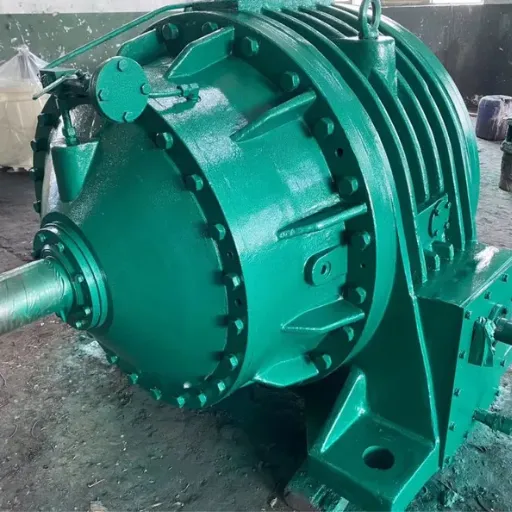 Read More
 -
Heavy Duty Planetary Reducer: A Guide for High-Torque Industrial Drives
July 30, 2026A heavy duty planetary reducer is the right choice when you need high output torque, shock-load capacity, and a compact footprint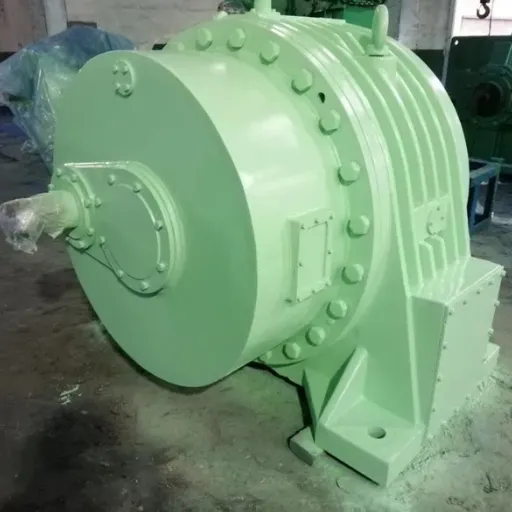 Read More
 -
Planetary Gear Motor: A Complete Engineer's Guide to Selection and Application
July 30, 2026A planetary gear motor is a compact drive solution that pairs a planetary gear reducer with an electric motor to deliver high outp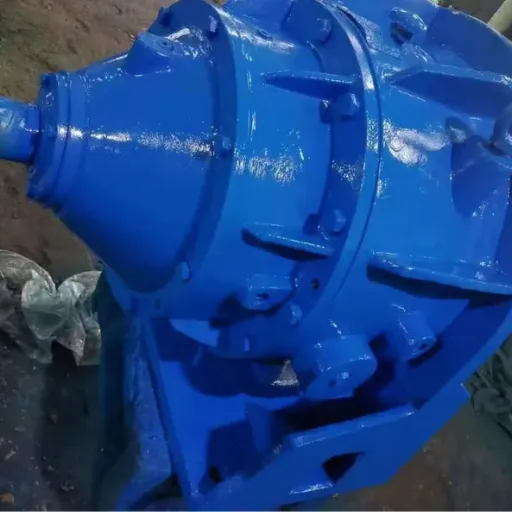 Read More
 -
High Torque Planetary Reducer: A Selection Guide for Heavy-Duty Industrial Drives
July 30, 2026A high torque planetary reducer is a compact drive system that distributes heavy loads across multiple planet gears meshing with a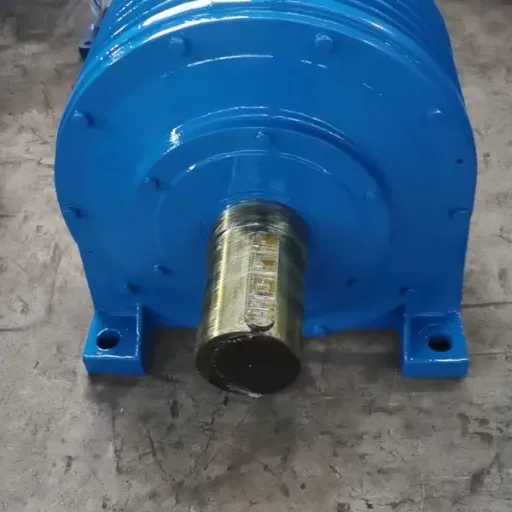 Read More

Contact Us
Recommended Products
-
 Kf127 Series Helical-Bevel Gear Motors for Industrial Power TransmissionNegotiableMOQ: 1 Set
 -
H1SH11 Modular Gearbox for Coal Mining Machinery With Cast Steel Housing and Mill Test ReportNegotiableMOQ: 1 Set
-
NGW101 Planetary Gear Reducer With Integral Flange Mount, 40Nm TorqueNegotiableMOQ: 1 Piece
-
Shanghai Dongfang DFSS400-520/4 Industrial Centrifugal Pump Wear RingNegotiableMOQ: 10 Pieces
-
SLOW300-550 High Hardness Shaft Bushing Spare Parts Matching Shanghai Liancheng Water Pump AccessoriesNegotiableMOQ: 1 Piece
-
Shanghai Kaiquan KQSN300-X13A/390 Original Pump Seal Ring Spare PartNegotiableMOQ: 10 Pieces
-
Shanghai Dongfang IHH100-65-250 Chemical Pump Anti-Corrosion Seal RingNegotiableMOQ: 10 Pieces
-
Shanghai Dongfang DFSS600-24N/6 Wear Spare Ring for DFSS Water PumpNegotiableMOQ: 10 Pieces
-
Coaxial Parallel Shaft Gearbox Systems With Right Angle Spiral Bevel Helical Gear MotorsNegotiableMOQ: 1 Set
-
ZS125 Cylindrical Gear Reducer for Industrial Mixing ApplicationsNegotiableMOQ: 100 Sets
-
ZLY224 Cylindrical Gear Reducer With Hardened Steel Gears and 224mm Center DistanceNegotiableMOQ: 1 Piece
-
R87 Compact Inline Gear Motor Low Noise for Conveyor EquipmentNegotiableMOQ: 1 Set
-
NGW93 High Efficiency Low Vibration Planetary Gear Reducer For Machinery DriveNegotiableMOQ: 1 Piece
-
H1SH11 Modular Gear Reducers for CNC Machine IntegrationNegotiableMOQ: 1 Set
-
Gearmotor Converter System R/F/K/S Series Coaxial Parallel Shaft Gearbox Spiral Bevel MotorNegotiableMOQ: 1 Set
-
G3 Series Flange Mounted Helical Gear Motor Speed Reducer With Bevel GearboxNegotiableMOQ: 1 Set
-
Industrial Mixer Drive Solution With F Series Parallel Shaft Geared Motors F57 to F97NegotiableMOQ: 1 Set
-
Parallel Shaft Speed Reducer F Series, Models F57 F67 F77 F87 F97, IP55 Protection RatedNegotiableMOQ: 1 Set
-
Parallel Shaft Geared Motor F Series, F57-F97 With C-face Input Flange, 220V/380V OptionsNegotiableMOQ: 1 Set
-
Industrial ZSY630 Cylindrical Gear Reducer For Industrial Transmission EquipmentNegotiableMOQ: 1 Piece